




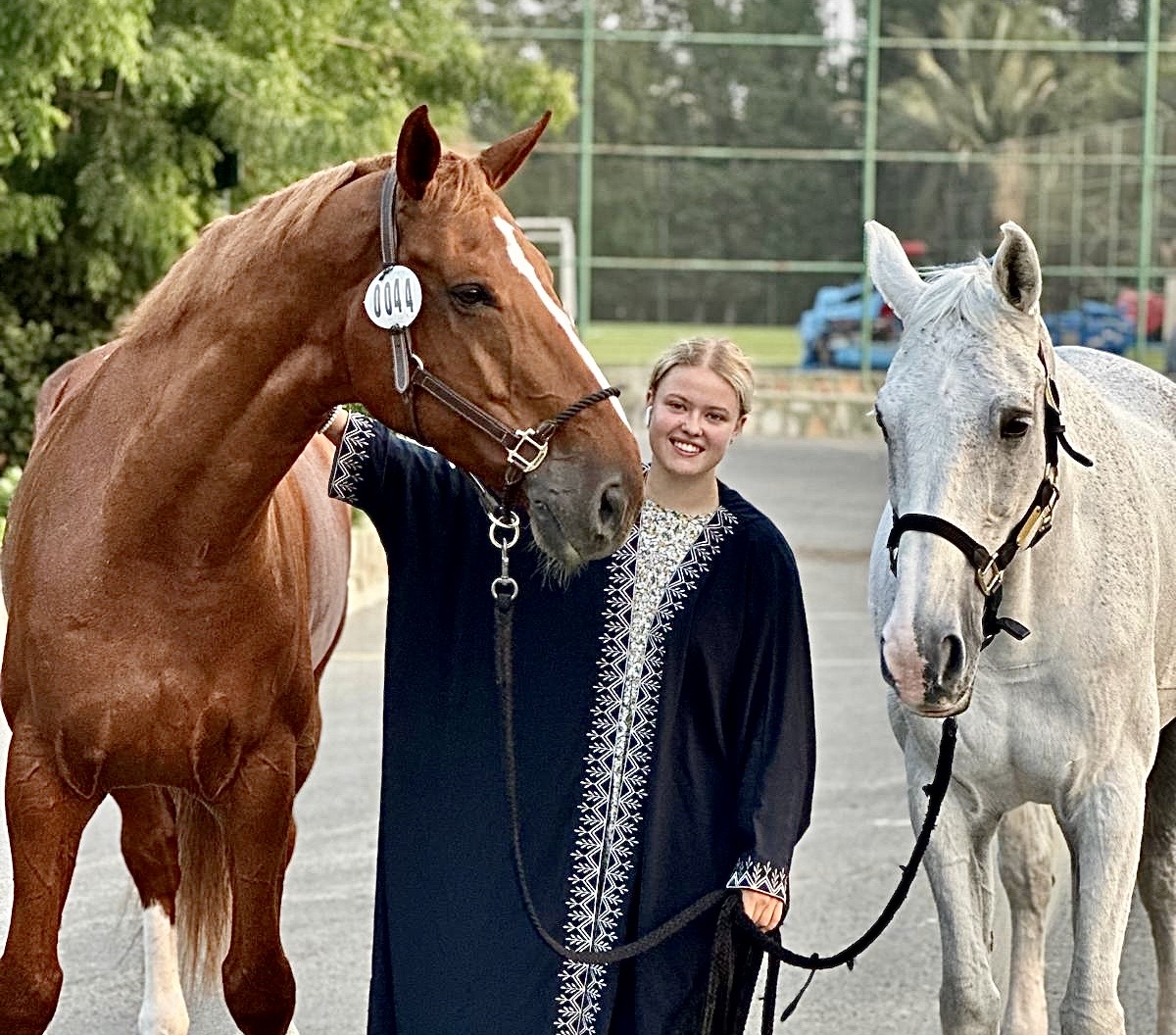
Alise Rute Mase went from Latvia to the Middle East with her grooming career, and the journey was not purely geographical – it also crossed a significant cultural divide. Was it very eye-opening – going from grooming in Europe to grooming in the Kingdom of Saudi Arabia [KSA] and the United Arab Emirates [UAE]? “There are too many things that are different,” she said. “Until you experience it yourself, you will never understand it.”
Fascinating Insight
Mase, 24, who permanently shelved a decision to study Veterinary Medicine in favor of full-time grooming, first went to the Middle East several years ago when she took a position with a Syrian family in Europe. Mase’s observations offer a fascinating insight into what it means to groom on tour in the Middle East and in spite of the significant challenges she faced, she recommends taking up the opportunity if it comes along.
Mucking stalls means taking out the trash
Mase’s first departure from her comfort zone did not come from the heat, or the language but from the basic everyday chore of mucking stalls. “In Europe we collect manure and use it for agriculture,” she said. “And I will never forget the first cultural shock I had in the Middle East was when I saw that they muck out using plastic bags for the manure and then put them in the trash.” Water bottles, general waste and manure – all go out together in the trash. Shavings’ bags are conveniently recycled for the purpose, or in Mase’s case, she decided to purchase large 55 gallon bags. “Mucking out into plastic bags – I think it’s out of this world,” she said.
Night classes are all night in the Middle East
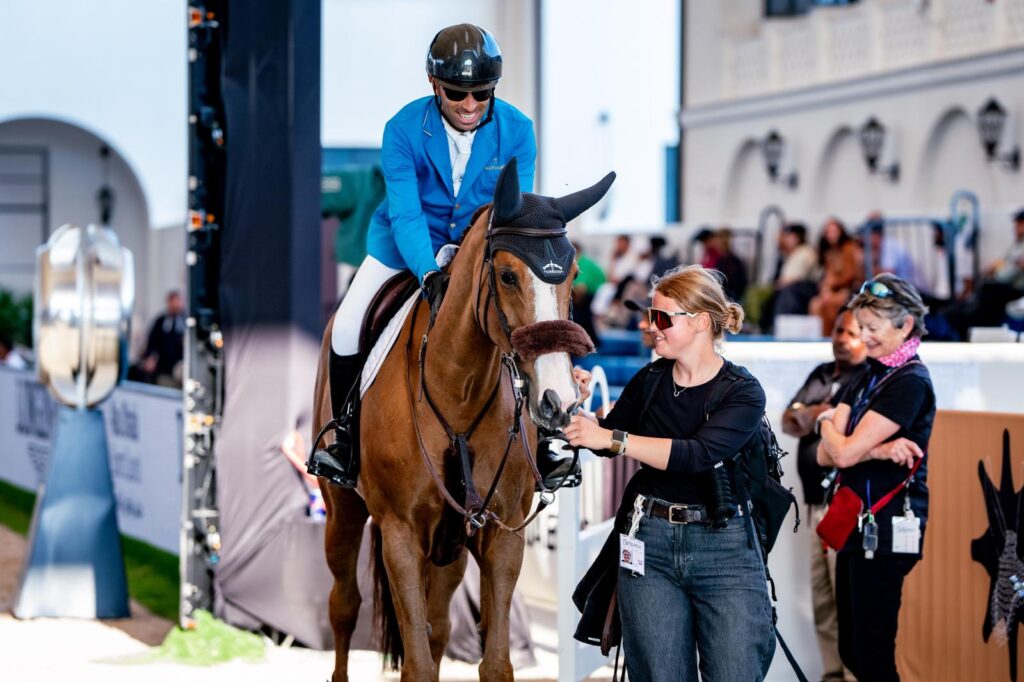
Working hours proved to be another major adjustment for Mase. In many Middle Eastern barns, particularly those run by local riders, the day’s work is split around the heat. Mornings begin super early and finish late morning, before a long break ensues. Work resumes late in the afternoon and often continues well into the night. “You finish stables at around 10 or 11 at night,” she said. “Sometimes even later.” Shows themselves can also run past midnight. “At one International Show, horses were warming up after two o’clock in the morning,” she said. “That was a four-star show.”
Ramadan
During the month of Ramadan, National shows may start around 9pm and run until 5am in the morning. Grooms could be doing night checks while competition was still ongoing. Now she is working with a European-styled organization in the UAE and when she is finishing work at five in the afternoon, many local grooms arrive to start their day. “You get used to it,” said Mase. “But switching back to the European system afterwards is very hard.”
Not all Middle Eastern experiences are the same
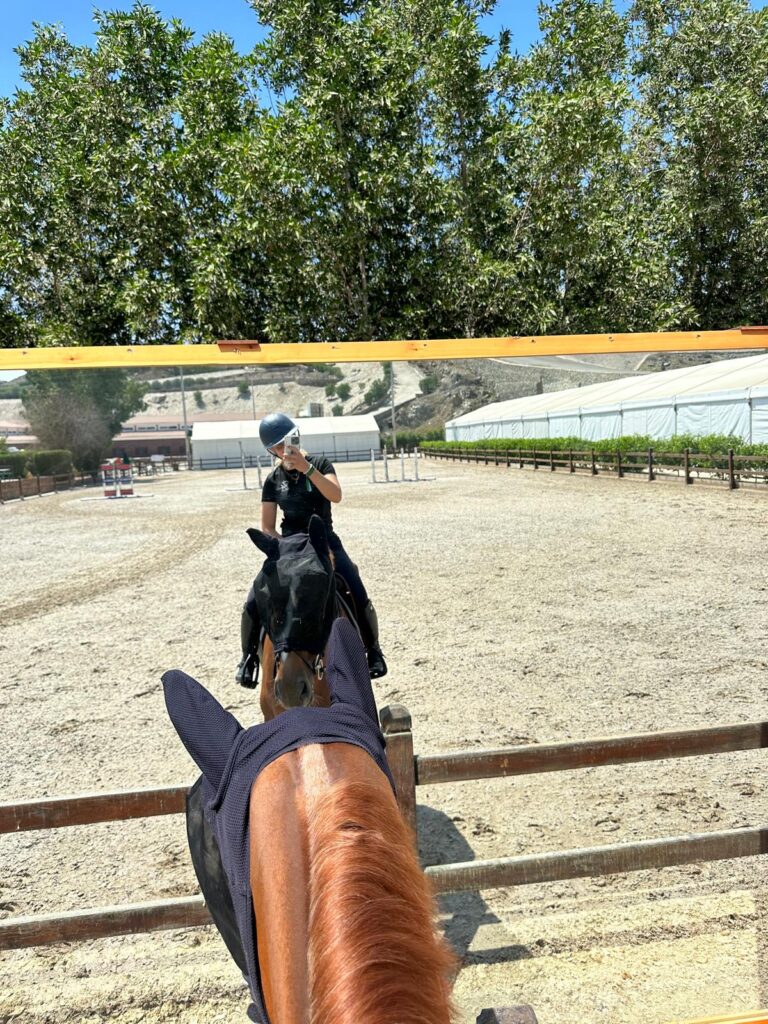
Mase has worked in both the UAE and KSA – and while both classify as Middle Eastern countries, their approach to equestrian sport is sometimes poles apart. In general, the UAE is well established with more modern infrastructure, access to veterinary clinics, farriers and offering more international competitions. KSA, by contrast, is still in an ongoing developmental phase. “It’s not comparable,” Mase said. “Saudi is wild.”
Two Worlds
In KSA, approaches and facilities are improving, as are welfare standards, but locally owned horses often face basic conditions in terms of outdoor stalls, minimal bedding, and logistical challenges in accessing professional care. “You see two worlds,” said Mase. “Sometimes luxurious with huge investment, and sometimes you close your eyes and try not to see things.”
At times, grooming in the Middle East is lacking in horsemanship. “There are grooms coming from different countries like Pakistan and India, for example,” Mase said. “And they come to work and earn money for their family, but they may never have had a connection with horses.”
Logistics limit access to veterinary care
The infrastructure for veterinary care is one of the biggest challenges for responsible horsemanship in KSA. There are fewer options in KSA for high-level clinics than in the UAE and often vast distances to get to them. “If something goes wrong with a horse, you are scared,” said Mase.
Last year, they were commuting between shows in Riyadh, where there is a veterinary hospital, and Jeddah, where there is not, and the distance between them requires a 19-hour drive. A new veterinary hospital has been built midway between the two. “You can try to get to that hospital, or you can try to go to Jeddah,” said Mase. “But if something happens, you don’t know if you are going to make it because it’s so far away.”
Special treatment for female grooms
In the UAE, there are a lot of female grooms due to the number of international riders who come over for the season, as well as Middle Eastern riders, based in Europe, who also frequently employ female grooms. Female grooms are in the minority in KSA. “In Riyadh, I think I was one of only two female grooms in the barn,” Mase said. In the UAE, Mase is able to travel with the horses by road, and journeys are typically no more than three hours. But as a female groom in KSA, she was faced with strict travel restrictions. “It is very weird for me that in KSA, I’m not traveling with horses because I am female,” she said. “There is no living accommodation in the trucks – just the regular truck cab.”
Hope for the Best
Since being part of the road trip is not an option, Mase has the comfort of taking a flight, but not the reassurance of being with her horses. “It might be just an hour and a half flight for me,” said Mase. “While for the horses, it is a very long drive. We did have a local groom traveling with the horses who knew some basic first aid. But a lot can go wrong in that scenario. You just have to hope for the best when your horse gets there. It is always very emotional when you put the horses on the truck and know that you will meet them the next day or the next evening.”
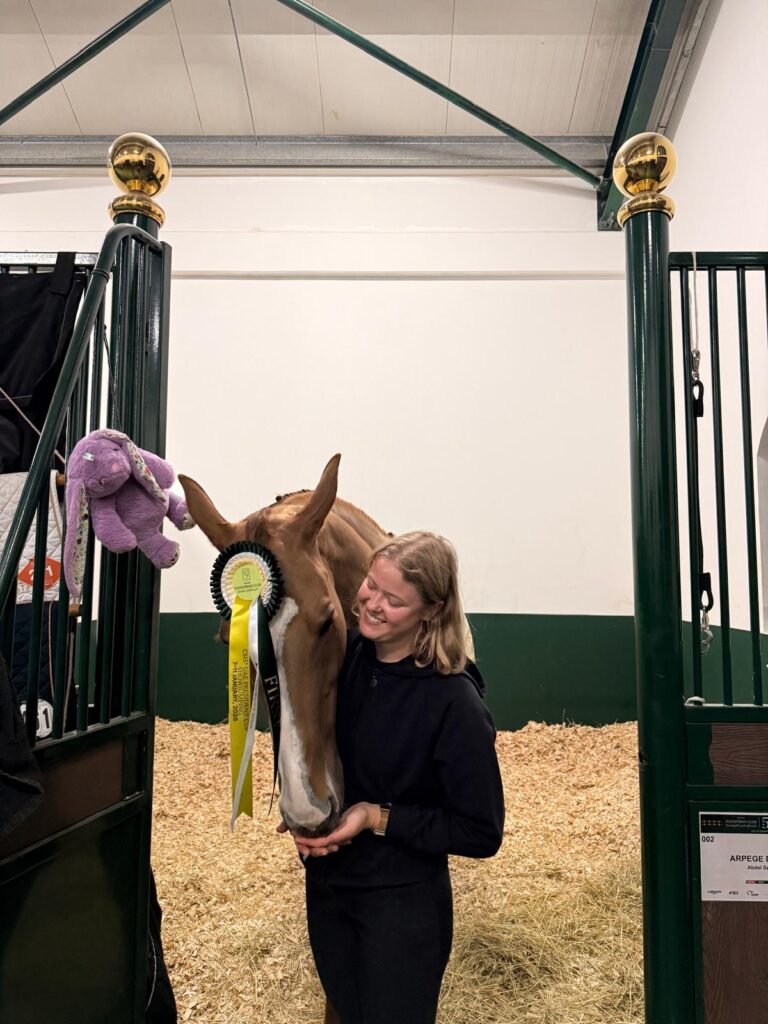
Segregation in stabling raises questions
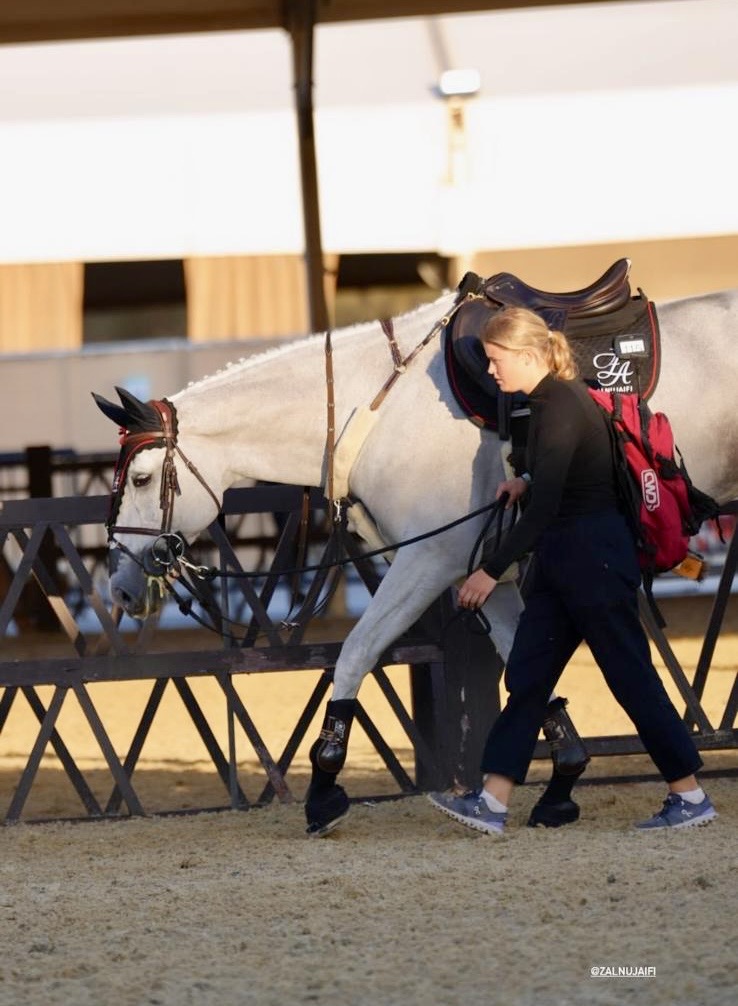
In the Middle East, there are specific regulations for stabling, depending on where horses have come from. “The horses are divided depending on from where they traveled to the Middle East,” said Mase. “They have local horse stables, and then they have GCC quarantine stables.” GCC stands for the Gulf Cooperation Council, which includes the countries of KSA, Bahrain, Kuwait, Oman, Qatar, and the United Arab Emirates.
Grooms Are Monitored
European horses are cordoned off in yet another part of the showground. Horses are not allowed to move between stables, and grooms are monitored with a system of wristbands. “We are not allowed to connect in any way,” said Mase. “And the funny part about all of this is that in the warm-up ring, we are all together. There is a separate area for flat work, and from there you go to the warm-up arena and then straight to the arena where you compete, and they connect. So in the end, the quarantine doesn’t matter, because you are all together in the end.”
Getting behind the wheel in the desert
Accommodation for grooms varies widely in the Middle East, ranging from studio apartments to Airbnb rentals and hotels. The real dilemma comes with the reality that to get to work, you have to drive. “You cannot survive without a car,” said Mase. “It’s just not made to have public transport. Some shows, the hotel is 30 minutes away, so we are always provided with a car.”
Wild
In the UAE, speeding restrictions, smart cameras, and overall strict rules help to temper the “still quite aggressive” driving that Mase encountered. “There are a lot of very unskilled drivers on the road,” she said. KSA is a different story. “In Saudi Arabia, it’s a wild game.”
The subject is quickly raised among grooms who have had to get behind the wheel in a country where civilization is never far away from wilderness. “The big question is always, how are you driving there?” said Mase. “Sometimes your map says to turn left or right, and then you are in the desert – and then maybe in one kilometer, you are back again on a normal road.”
Never complain about horse show food again
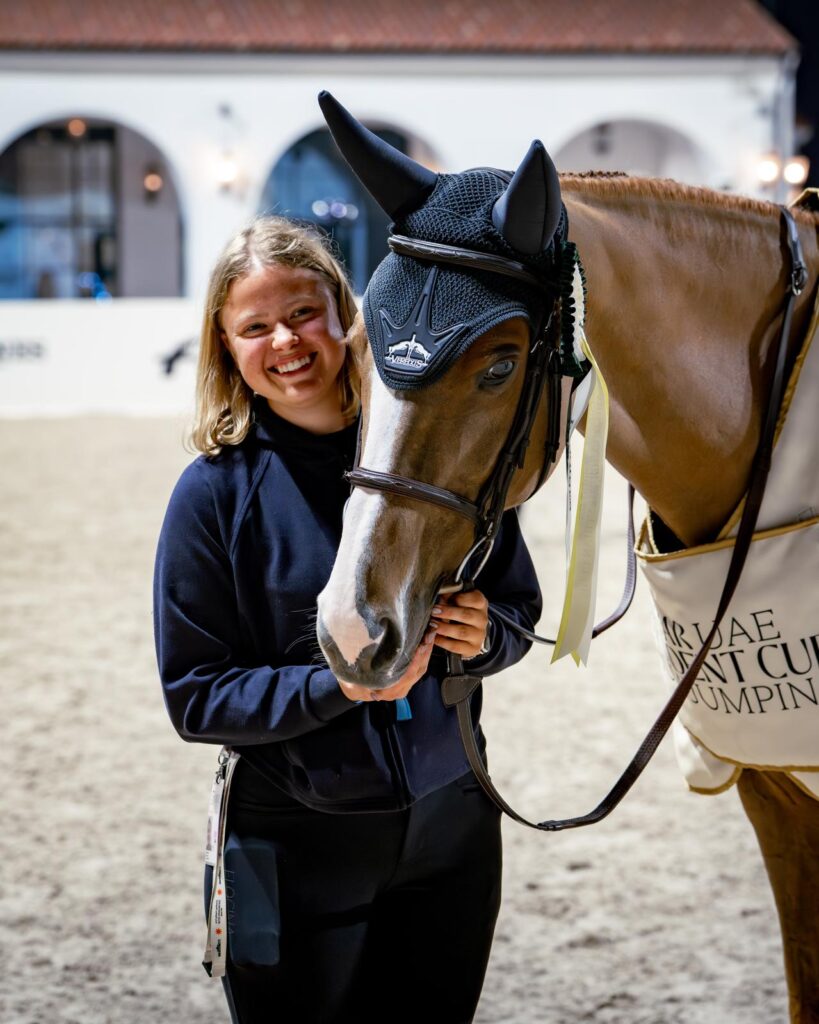
Mase and her fellow grooms have yet to adapt their palates to Middle Eastern food. Locals sometimes bring food for the European grooms. “It is very nice of them,” said Mase, “but you open it up, and you’re like yeah…”
DoorDash
Luckily, in the UAE, there is a version of DoorDash called Talabat. “We are always ordering Talabat at the show,” said Mase. “You have this App and you have thousands of options – acai bowls, sandwiches, Starbucks, everything.” A Talabat delivery arrives by motorcycle. “They arrive at the show and just hand it over the gates,” she said.
In KSA the options for food deliveries from restaurants are more limited. Sometimes the best you can hope for is “more understandable food,” said Mase, “but still a lot of chicken with rice.”
Challenging yes – but worth it
The Middle East show circuit is evolving and improvements are being made in standards and the introduction of major international events – the recent announcement that they are planning to recreate the Hickstead Derby in Abu Dhabi this year is a reflection of the ambition. “Every year I see a lot of improvements,” said Mase, who has just returned to groom in the Middle East after being absent for two seasons. “I can already see that a lot of things have changed. I’m looking at it through different eyes because I have experience and another perspective.”
The Arabian Horse
The Middle East’s past is inextricably linked to horses. The Arabian horse’s origins can be traced back some 4000 years and while acclaimed for endurance and not for show jumping, the Arab horse has influenced the evolution of horse breeds worldwide. “Their whole history is connected to horses with the Arabian horse,” said Mase. “And they really want to do the show jumping. They are really trying to make the sport better, to make the venues better and to make it more international. I think if you have the opportunity to go and groom there, you have to do it. I would say it’s a nice experience – especially the Emirates. And every time when I am returning I am happy, because it’s nice to have a sunny winter.”

Sarah Eakin has a long history of sports reporting and covering equestrian disciplines – particularly show jumping, polo, racing and dressage – for a range of international publications as writer and editor-in-chief. In 2024, Sarah launched Paper Horse – an online magazine with an eclectic mix of stories from the horse world at www.paperhorsemedia.com. Paper Horse is an official Media Partner of Wellington International. Sarah was born in England and came to the US in 1996 as Sidelines’ Polo Editor; at the time she was chief polo writer at the Horse and Hound and Polo Correspondent to The Daily Telegraph. She married US professional polo player Gary Eakin and stayed Stateside traveling throughout North America while covering equestrian events. She is also an author; Wed, White and Blue, her first novel is on Amazon.