




In 2021, we faced one of the most awful experiences the European equestrian world has ever seen. I remember it like it was yesterday. I was living and working in Denmark. We were getting ready to go to Spain for the tour, and I had already started organizing everything for the trip. Then the news broke -luckily before we even left home- that one of the biggest efforts to contain a fast-spreading neurological strain of EHV-1 was underway in Spain. In Valencia, the show went into full lockdown. No horses in. No horses out.
The FEI even called it “probably the most serious outbreak in Europe for decades.”
Scenes Straight Out Of A Nightmare
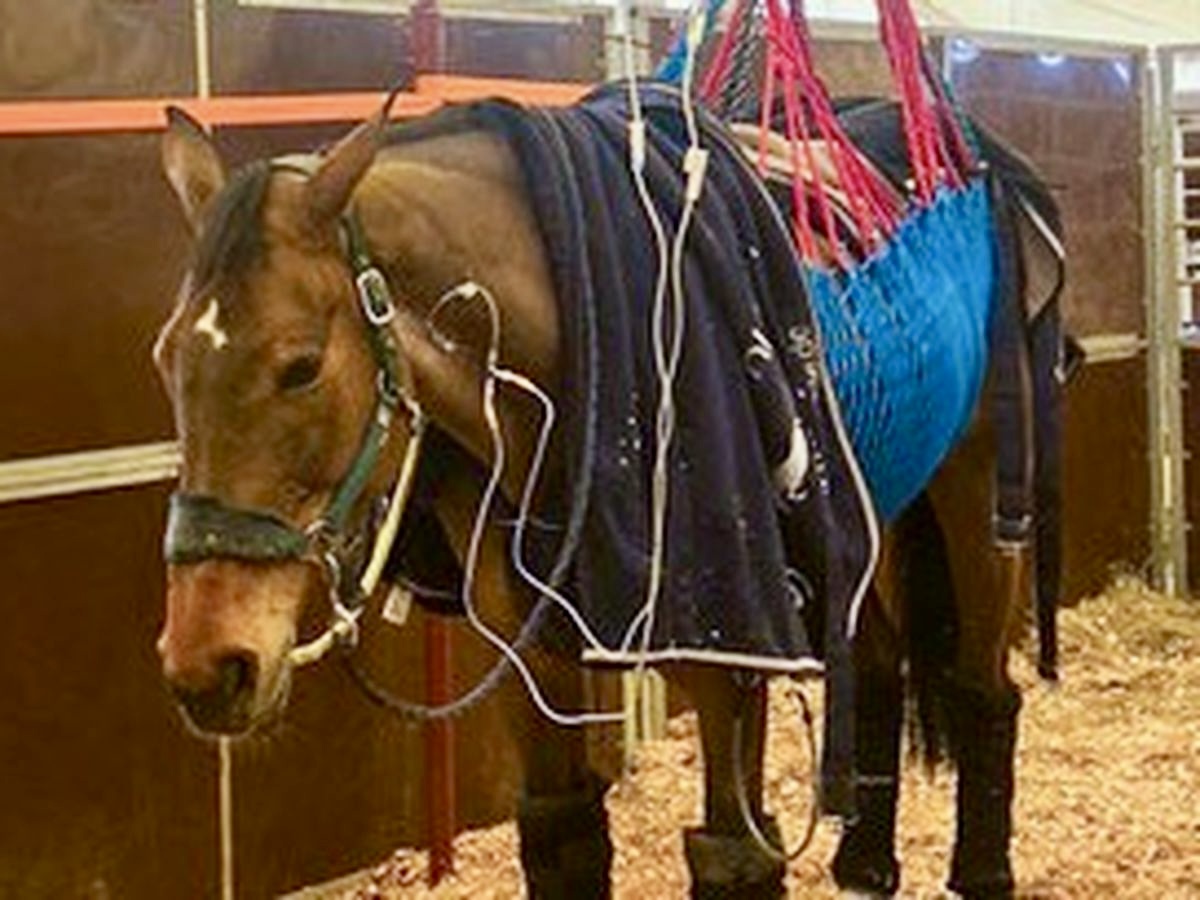
Videos started circulating on social media, scenes that looked like something out of a nightmare. Horses suspended in harnesses, wearing helmets because they couldn’t stand on their own and risked hitting their heads into the walls. Horses that needed assistance to pee or poop. It was the most awful thing I’ve ever witnessed, and I wasn’t even on-site.
The virus spread fast. With only two vets for more than 150 horses, they worked day and night, running on almost no sleep. Grooms, riders, vets, everyone fought together. But for many horses, it was already too late. A dozen deaths were officially confirmed, but according to many grooms and riders on-site, the true number was higher. The true scale of the tragedy never went public.
The worst part of it all was the growing concern among many on-site that the virus had been present before the situation was publicly communicated. During that time, trucks with new, seemingly healthy horses continued to arrive, and horses were still traveling in and out – something that likely contributed to the spread of the virus across borders.
“Take This Seriously; Follow Protocols!”
A rider who was there shared their perspective on what they experienced behind the scenes:
“People really need to sharpen up and take this seriously. Take temperatures, follow the protocols, all of it. It’s also incredibly important that organizers inform riders immediately if any horse shows a fever, so things can be stopped before it spreads. That’s exactly what happened at a show in Lillestrøm one year. They handled it perfectly. Everyone was informed right away, went home, and isolated their horses.
The biggest problem in Valencia was that the organizer didn’t communicate openly about what was going on. We later heard that several horses had already been sick for days before we even arrived. They should have stopped the show and called everyone who was on their way. Riders left without knowing, carried the virus with them, and spread it further. If the organizers had handled it correctly, I’m convinced that every horse that died could have been saved.” — A rider who was on-site
“People Were Crying, Horses Were Dying”
As the truth finally came out, help began to pour in. Switzerland sent harnesses, Germany sent vets. People all over Europe donated money and supplies to support the horses trapped in Valencia. And it wasn’t only Valencia that descended into chaos; the ripple effect hit other shows too. I spoke to two grooms who were at a show in Cádiz, Spain, who shared their memories from those days:
“We were at the Sunshine Tour when everything started happening in Valencia. At first, it was just rumors; no one knew what was real. One day, I came back from the ring and half the stable was already packed. People were crying and shouting that we all needed to leave immediately because horses were dying.
Some people loaded their horses and hopped straight in their trucks, trying to leave even without health papers. Others refused to go anywhere. It was total chaos. Our boss wanted us to drive straight back to Belgium without any stops, but with only one driver per truck, neither people nor horses would benefit from that. Even once we left, it took days to find layovers that would accept us. We arrived to find empty boxes with no shavings, and had to set everything up ourselves.
Thankfully, none of our horses ended up getting sick, but the panic and the not knowing… I’ll never forget that. It really showed how fast fear spreads when communication breaks down.” – A groom at the Sunshine Tour
“Nobody Wanted To Take Us In”
“We left the Sunshine Tour to quarantine at a stable in the Netherlands, and when it was finally time to head home, we drove all the way to Norway because we couldn’t stop anywhere; people were just too scared. We were unlucky that the ferry from Denmark to Norway wasn’t running because of a storm, so we had to take a long detour, and the whole trip ended up taking around 24 hours. Even though we had tested our horses in the Netherlands and stayed in quarantine for 2–3 weeks, nobody wanted to risk taking us in.” – Another groom who was present at the Sunshine Tour
Early Detection Can Save Horses’ Lives
I know many people think the temperature app is “annoying,” “stupid,” or “time-consuming.” But we all need to remember why it is required, why we take temperatures twice a day. Early detection can save horses’ lives. And if a horse shows symptoms, it has to be reported immediately, whether you’re a groom, rider, or show organizer.
Disinfecting Stalls
I’ve also noticed more and more shows getting sloppy with disinfecting stalls. Right after Valencia, everyone cleaned like their life depended on it. But each year, it seems like fewer remember why we started doing it. When you arrive at a show, there should be no old shavings, no leftover hay or food, no manure in the stall. Stalls must be emptied and disinfected between each horse. This is not optional; it’s how we keep our horses safe.
Clear and Prompt Communication Makes A Difference
We also need better communication. During the Valencia outbreak, concerns were growing, and many on-site felt that clearer and prompt communication could have made a critical difference. Not long after, another show faced a suspicious case, but that organizer immediately informed everyone. Riders went home, isolated their horses, and no outbreak occurred. That’s the difference clear communication makes. It saves horses. It prevents chaos. And it stops tragedies before they start.
So why bring this up again, years later? Because the virus is spreading in the U.S. right now and we cannot let history repeat itself. We need to be faster, smarter, and better than we were in 2021.
This article reflects the experiences and memories of riders and grooms who were present at the time.
Note from the HorseGrooms Team:
What the research tells us
After the Valencia outbreak, researchers studied what happened on site to better understand how the virus spread and how future outbreaks can be managed. The study followed 160 horses that remained in Valencia after lockdown, with detailed health and test results from 60 of them. PCR testing, short for Polymerase Chain Reaction, is a lab test that looks for the virus itself. Using samples from the nose, throat, or blood, it can detect EHV-1 even before a horse shows clear signs of illness. This makes it a very important tool during outbreaks.
The research confirmed what many grooms and vets saw at the time. Fever was common, and some horses quickly developed neurological symptoms. Early detection made a real difference. The study also showed clear risk factors, including age, sex, where horses were stabled, and how the stables were built and ventilated. Horses kept in the middle of the large tent, with less airflow, had a higher risk of serious illness.
Regular PCR testing helped manage quarantine more safely and reduced the risk of the virus spreading further. The findings underline an important message. Temperature checks, good ventilation, clear communication, and strict biosecurity are not extra rules. They are practical steps that help protect horses’ health and lives.
Click here to view and download the abstract of the clinical and epidemiological study that was done in Valencia.
Photo from Suzzie Ruiter’s Go Fund Me page “Sending disinfection to Valencia fighting EHV-1”