






For nearly 25 years, the EQUUS Foundation has been working to protect America’s horses and advance the horse-human bond. Along the way, we have learned a great deal about what happens when horses move from one stage of life to another and the challenges that can arise when a horse needs a new career, a new home, or a place to retire.
For grooms, this can be a particularly important conversation.
The Special Relationship Between a Groom and a Horse
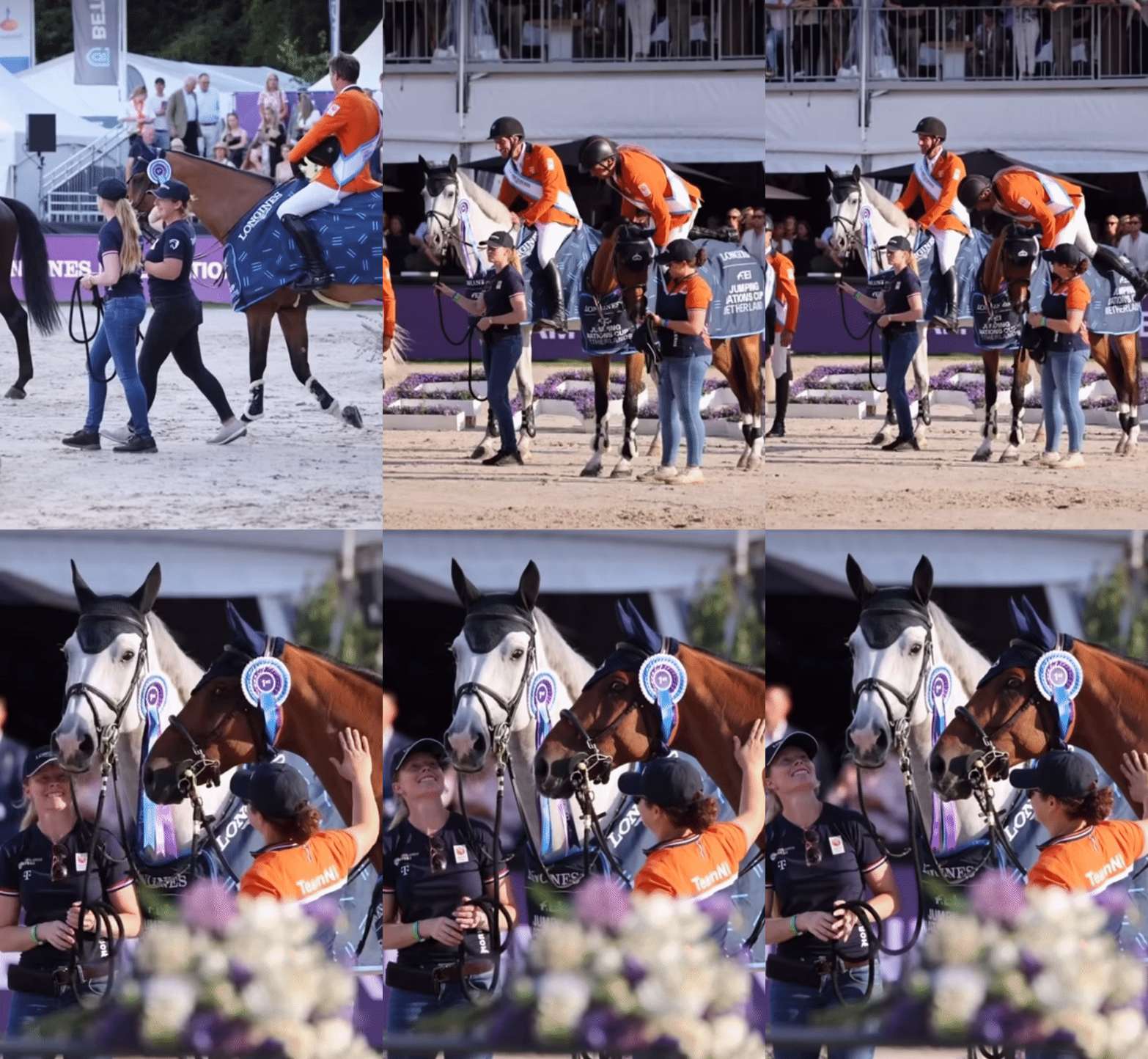
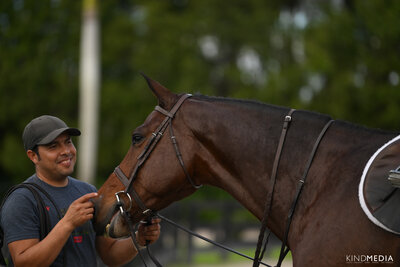
There is a relationship between a groom and a horse that is difficult to explain to someone who has never cared for a horse day after day.
A groom knows the sound of a horse’s footsteps in the aisle, how the horse looks and acts when feeling good, and the subtle changes that may signal that something isn’t quite right. A groom knows the routines, preferences, personality, and quirks. After months or years of daily care, a groom may know that individual horse better than almost anyone.
That knowledge can be incredibly valuable when a horse’s competitive career begins to change. It can also be difficult.
A groom may wonder what will happen to a horse after it leaves. Will the next home really be a good fit? Will the horse be expected to do more than is appropriate? What happens if the horse isn’t suitable for a lesson program or another competitive discipline? What if the horse really needs to retire from active competition?
And perhaps the hardest thought of all: What if the horse falls through the cracks somewhere along the way and eventually needs to be rescued?
No one who has cared deeply for a horse wants to think about that possibility. But thinking about it before a transition begins may be one of the best ways to help prevent it.
What Does the Horse Need in Its Next Chapter?
The next chapter does not necessarily have to involve another competitive career. It might be a lower-level discipline, a carefully matched private home, a retirement setting, or an Equine Assisted Services program. Sometimes a horse simply needs a life that asks less and provides more opportunity to enjoy being a horse.
The important question is what is appropriate for that individual horse and what will provide a realistic opportunity for a good quality of life. This is where a groom’s firsthand knowledge can be helpful.
The groom is typically not the owner or trainer, and ultimately the person with ownership responsibility makes the decision about where the horse goes. That responsibility needs to be respected.
Valuable Observations
At the same time, valuable observations should not be left out of the conversation. A groom might know that a horse thrives with a quiet routine, becomes overwhelmed in a busy environment, enjoys certain types of work, or is simply more comfortable with less physical demand. Those observations can help an owner think through what a successful transition might look like.
A competition record tells us what a horse accomplished. It doesn’t necessarily tell us what the horse needs next.
How Grooms Can Help Prepare a Horse for Its Next Home
Before a transition, it can be helpful to consider:
- What does the horse enjoy?
- What type of environment is relaxing or overstimulating?
- How much and what type of activity can the horse comfortably manage?
- What veterinary, nutritional, medication, or other management needs are important to maintaining quality of life?
- What housing, turnout, handling, and daily routines work best for this horse?
Those details can be especially important when an owner is making a decision about a horse whose competitive career is ending but whose next chapter has not yet been determined. Sometimes the answer will be another career. Sometimes it will be retirement. An equine charity may be the right resource for rehabilitation, retraining, adoption, rehoming, or retirement.
Equine Assisted Services may also provide an option for appropriately selected horses, but only when the horse’s temperament, soundness, training, workload, and individual needs make that setting appropriate.
The right opportunity is the one that works for the horse.
How Do You Know if an Equine Charity Is Trustworthy?
When an equine charity is being considered as part of a horse’s next chapter, it is important to look beyond whether the organization is willing to accept the horse. Does the organization have the experience, resources, facilities, and practices needed to provide appropriate care? Is the organization prepared to support the horse throughout its time in the program, including if circumstances change?
These are important questions for an owner, trainer, or groom to consider before a horse is placed or donated.
The same questions matter when deciding where to provide financial support, equipment, or services. Good intentions can do a great deal of good when they are directed to organizations that have the capacity and commitment to use that support responsibly. This is an area where the EQUUS Foundation can serve as a trusted resource.
A Trusted Resource
Through the Equine Welfare Network and its Guardian and Mentor review and accreditation programs, the EQUUS Foundation provides information about charities working to protect horses and strengthen the horse-human bond.
The Foundation evaluates 58 equine welfare practices and 34 business practices, including equine welfare and care, facilities, safety, transition and aftercare, governance, financial sustainability, human resources, program operations, transparency, and evaluation.
Questions Every Groom Should Know to Ask
For a groom, owner, or trainer trying to help a horse find the right next home, there are some practical questions worth asking.
Questions About the Horse and Its Next Home
- What does this horse need to be successful and comfortable in a new setting?
- Is the proposed home a good match for the horse’s temperament, soundness, experience, and level of activity?
- Does the person or organization taking the horse understand its needs and limitations?
- What happens if the placement doesn’t work out?
- What kind of follow-up is available to check in on the transition?
- As the groom, could I be provided with an opportunity to check in on the horse?
Questions About an Equine Charity or Retirement Organization
If an equine charity is being considered as the next home, there are additional questions worth asking:
- How are horses evaluated and accepted?
- How are individual care and workload needs determined?
- How are veterinary, farrier, dental, nutritional, and behavioral needs addressed?
- What happens if a horse is no longer suitable for the program?
- What adoption or placement agreements are in place?
- What follow-up is provided after placement?
- What happens if circumstances change?
Transparency about the organization’s programs, finances, leadership, and capacity to care for the horses it accepts is important as well.
Finding Responsible Organizations Through the EQUUS Foundation
The Equine Welfare Network
The EQUUS Foundation’s Equine Welfare Network can be a good place to start, and a central part of our work is transparency of organizations. The Network connects people with equine charities working in Equine Transition Services and Equine Assisted Services, all of whom have gone through the Foundation’s review process.
The Guardian and Mentor Programs
The Guardian and Mentor programs provide robust information about organizations that have demonstrated their commitment to the Foundation’s standards.
Asking Questions
Having this information is a good place to start, but it doesn’t replace asking questions and determining whether a particular horse is a good fit for a particular organization. It simply gives owners, trainers, grooms, and donors another resource to help them do their homework and make an informed decision.
Over more than two decades, the Foundation has learned a great deal about horses in transition, the organizations that care for them, and the challenges that can arise when a placement doesn’t work as intended.
We also know that there is no single answer for every horse.
A Groom’s Knowledge Can Help Shape a Horse’s Future
That is why the upcoming HorseGrooms seminar will focus on practical considerations rather than a one-size-fits-all approach. We will talk about ways to think ahead about a horse’s next career or next home, information that can help owners make better decisions, questions worth asking when considering an organization or placement, and ways a groom’s firsthand knowledge might be helpful while respecting the responsibilities of owners and trainers.
Most of all, the conversation is about giving horses the best possible chance of a successful transition.
A groom may not get to choose where a horse goes next. But a groom may have information that helps an owner see the possibilities more clearly and better understand what the horse needs in the next stage of life.
Think About the Transition Before It Happens
When everyone involved takes the time to think about the transition before it happens, there is a better chance of finding a next chapter that works for the horse and for the people who have cared so much about that horse along the way.
The Upcoming Webinar in the HorseGrooms Community
If you’ve ever wondered what happens to a horse after leaving a program, or how you can help an owner think through the next step, I hope you’ll join us for the upcoming HorseGrooms webinar.
We’ll talk about the questions worth asking, the resources available, and how the people who know a horse best can contribute valuable information to the transition process.
In The Meantime
In the meantime, visit the EQUUS Foundation website and explore the Equine Welfare Network, Guardian and Mentor organizations, and the criteria used in our comprehensive review process.
These resources can be a useful starting point when a horse needs a new home or when deciding where to direct financial, equipment, or other support.
Join Our Free Webinar with Dr. Karin Bump
When a Horse Needs a New Home: What Every Groom Should Know
Tuesday, October 20, 2026 | 7 PM EST
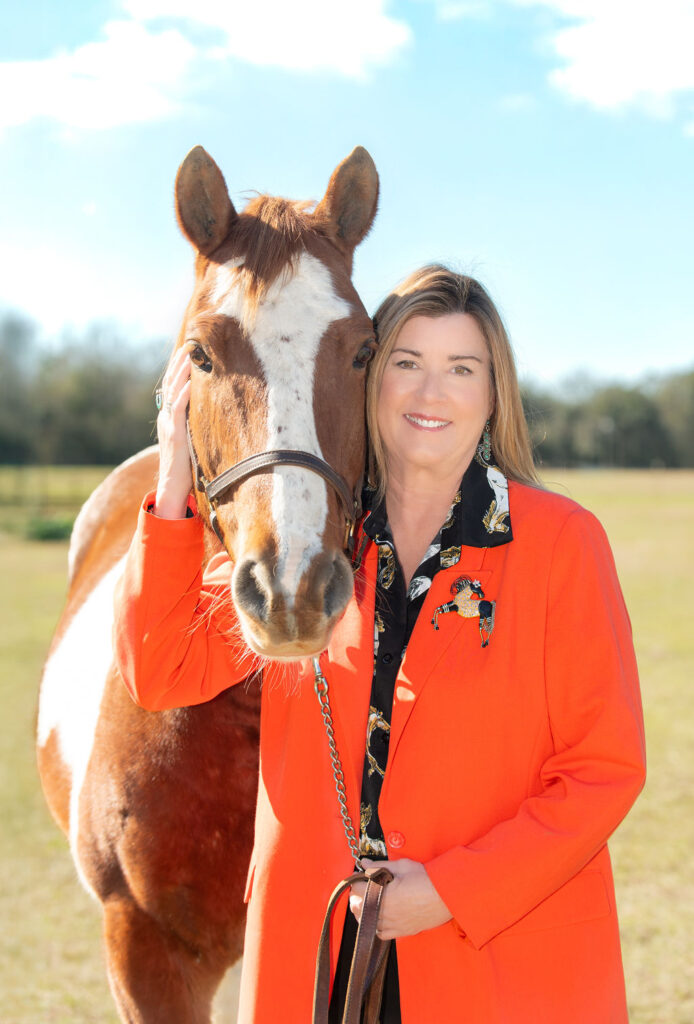
Join Dr. Karin Bump, Chief Operating Officer of the EQUUS Foundation, for a free educational webinar in the HorseGrooms Community.
Learn how to recognize responsible rescue, retirement, and rehoming organizations, identify potential red flags, and use your knowledge as a groom to help owners make informed decisions about a horse’s future.
Free registration here, in the HorseGrooms Community.
About the Author
Dr. Karin Bump, Ph.D., is Chief Operating Officer of the EQUUS Foundation, a nationally respected nonprofit dedicated to protecting America’s horses and strengthening the horse-human bond. With more than 25 years of experience in equine welfare, education, and nonprofit leadership, she works to improve standards of horse care and promote responsible equine transition services.
Karin holds bachelor’s and master’s degrees in Animal Science, specializing in equine nutrition and exercise physiology, and a Ph.D. in Higher Education Administration and Policy Studies. She is particularly passionate about helping owners, trainers, and grooms make informed decisions about horses transitioning to new careers, homes, or retirement.
HorseGrooms is a platform of resources, education, and support for grooms by grooms. This is an online community, hub of resources, and spotlight of industry highlights born out of love for the horse and love for the sport. But our mission goes beyond simply providing resources and creating content.
Our goal is to create a space to keep horsemanship alive; for grooms to support and educate each other; and to help advance the craft of grooming. HorseGrooms is dedicated to ambitious grooms everywhere.