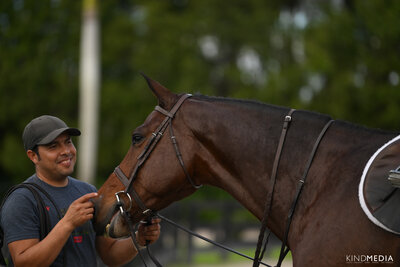




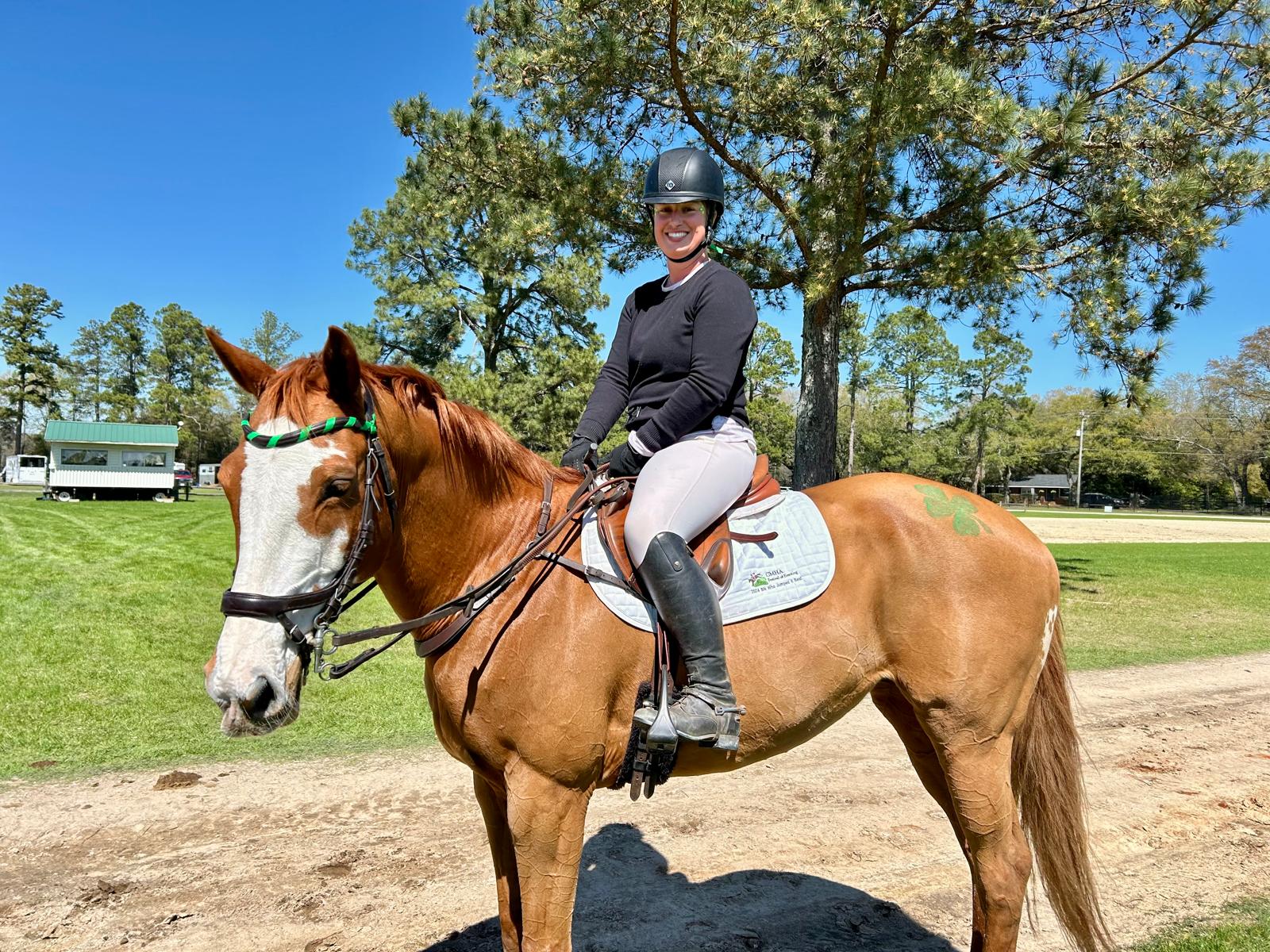
Caitlin Dwyer, at just 32, was used to being on the wrong side of age limits for grants and scholarships until the World Class Grooming Career Development Grant caught her eye. “I was so excited,” she said. “Being 32 years old, every scholarship or grant or fund is always cut off at like 25.”
The inaugural award launched by Aiken Horse Park Foundation and veteran eventing groom Emma Ford, turned out to have Dwyer’s name on it. She plans to use the $5000 award to gain experience at the upper levels of eventing through the mentorship aspect of the grant, that will see her joining Sharon White’s team, working alongside head groom Kate Servais.
Inaugural Award Set to Be a Learning Curve
The program is deliberately flexible so that Dwyer and her mentor can decide when, and for how long, the placement will take place.
“Since I’m the first one to get the grant, we’re kind of paving the way as we go,” she said. “We don’t have a set amount of time that I think I’ll be with them. So we’re playing it by ear.”
Dwyer rose to the top of a competitive application process that featured nine candidates, all of whom were strong enough to make the final decision a difficult one.
Tough Competition Made Judging Challenging
“We were super excited. We got nine applicants and they were all very strong,” said Ford, whose own career path included grooming for Olympian eventer Phillip Dutton for 16 years. “They actually made it difficult to go through them and then we as a committee whittled it down to three.”
Those three finalists were interviewed over Zoom before Dwyer was selected. Several reasons dictated the final decision. The committee were impressed that Dwyer already runs her own equine massage business and provided impressive references from the riders and trainers she had previously worked for. “Her application was very good,” Ford said. “It was obvious she was a self-starter.”
Winning Candidate Bot Born Into Horses
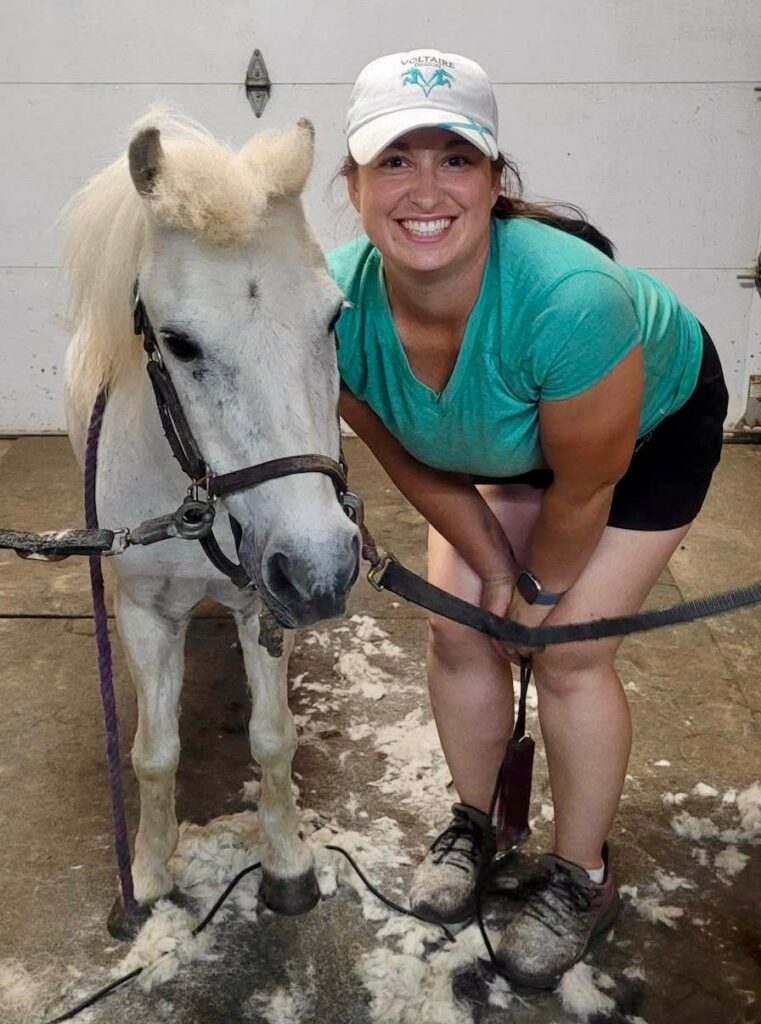
Dwyer’s equestrian journey did not begin by being born into an equestrian family. She was always asking her dad if she could ride. Unexpectedly and fortuitously, her father married into the horse world.
“I wasn’t born into horses. I was always bothering my dad about wanting to ride. And then he actually married a horse trainer,” she said.
She started riding at eight and has spent more than two decades with her home-base farm, Apple Tree Farm in New Hampshire, where she has worked with trainer Alison Eastman since she was around 12 years old. Eastman has played a central role in Dwyer’s development, both as a rider and now as a groom.
“She’s been incredibly supportive of me and my riding and in this new endeavor with my career as a groom,” Dwyer said. “She’s been huge.”
From Classroom to the Barn – a Major Career Change
Dwyer continues to ride and teach lessons, while also grooming for horses at competitions. But increasingly, she has been turning her attention towards making grooming her full-time career. Her previous career was as a fifth-grade school teacher. Eventually, however, she realized that she wanted to find a way to work with horses full time.
“I just couldn’t work in schools anymore,” she said.. “I thought, I’ve got to figure out how to do horses full time because I’d always done everything on the side.”
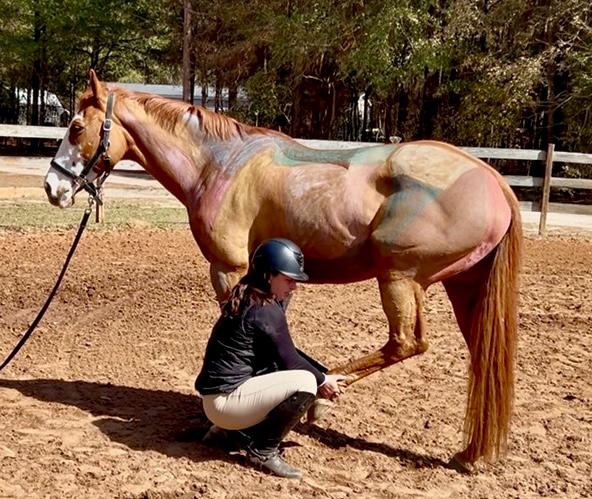
That decision led her to equine massage therapy. Wanting to make herself more marketable as she established her own business, Dwyer travelled to Virginia last August to undertake an intensive programme with Equissage.
“We did like a bunch of anatomy studying ahead of time, and then we did, you know, it was like 10 hours a day in a barn for a week, just learning the techniques and all this,” she says.
Massage Business Helped Carve Dwyer’s Path
The massage business named Mane-Tenance Required, LLC has since become an important part of her working week, while weekends are largely devoted to competitions. “That’s been huge for starting my business – that kind of keeps me busy during the week,” she said. “And thenI’m pretty much at events every weekend.”
The grant will allow her to take the next step without having to abandon that developing business. She expects the money to help cover practical expenses such as accommodation and travel while she is away on her mentorship placement.
“I plan to at least start off by using it for my expenses when I go to Sharon White’s farm,” she said. “Since I won’t necessarily be doing my own business work, it’ll help support me in that time that I would be kind of away from my own business.”
Dwyer, who made the most of her time in Aiken by attending Ford’s equestrian evening seminars, hopes that, depending on how much remains, the grant might also allow her to attend more educational events, or gain experience with other teams. “I would like to immerse myself as much as possible,” she said.
Top Level Ambition Is for Behind-the-Scenes Not in the Spotlight
The longer-term ambition is not necessarily to become a top-level rider herself. Dwyer still loves riding and remains committed to her own horse. “I love riding my horse,” she said. “But we have no aspirations to do all those crazy massive jumps that these people do. I am happy at the low levels of eventing and dressage.”
She does have high hopes though, when it comes to being behind-the-scenes of competition. “I would love to be part of a team going into the Olympics,” she said. “That would be absolutely crazy.”
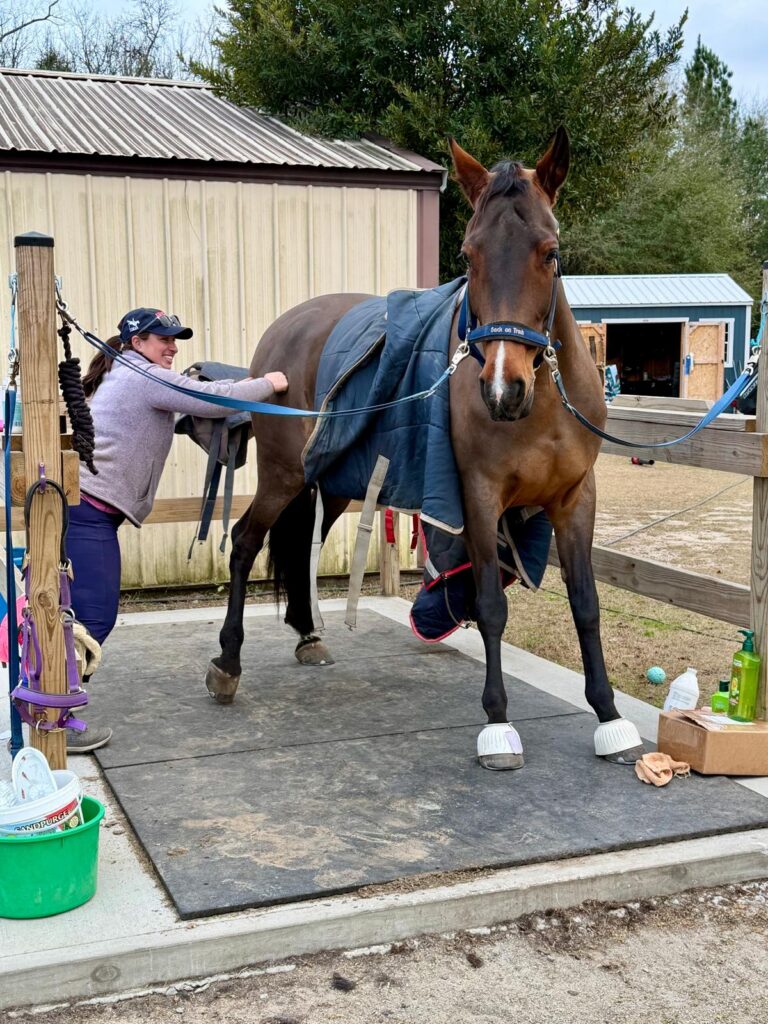
Alongside a clear ambition, it is equally clear where Dwyer sees herself within that world. “I am very committed to being the boots on the ground helping those people get to achieve their dreams because I think that’s equally as cool to me. And important.”
Attitude a Key Component in Selection Process
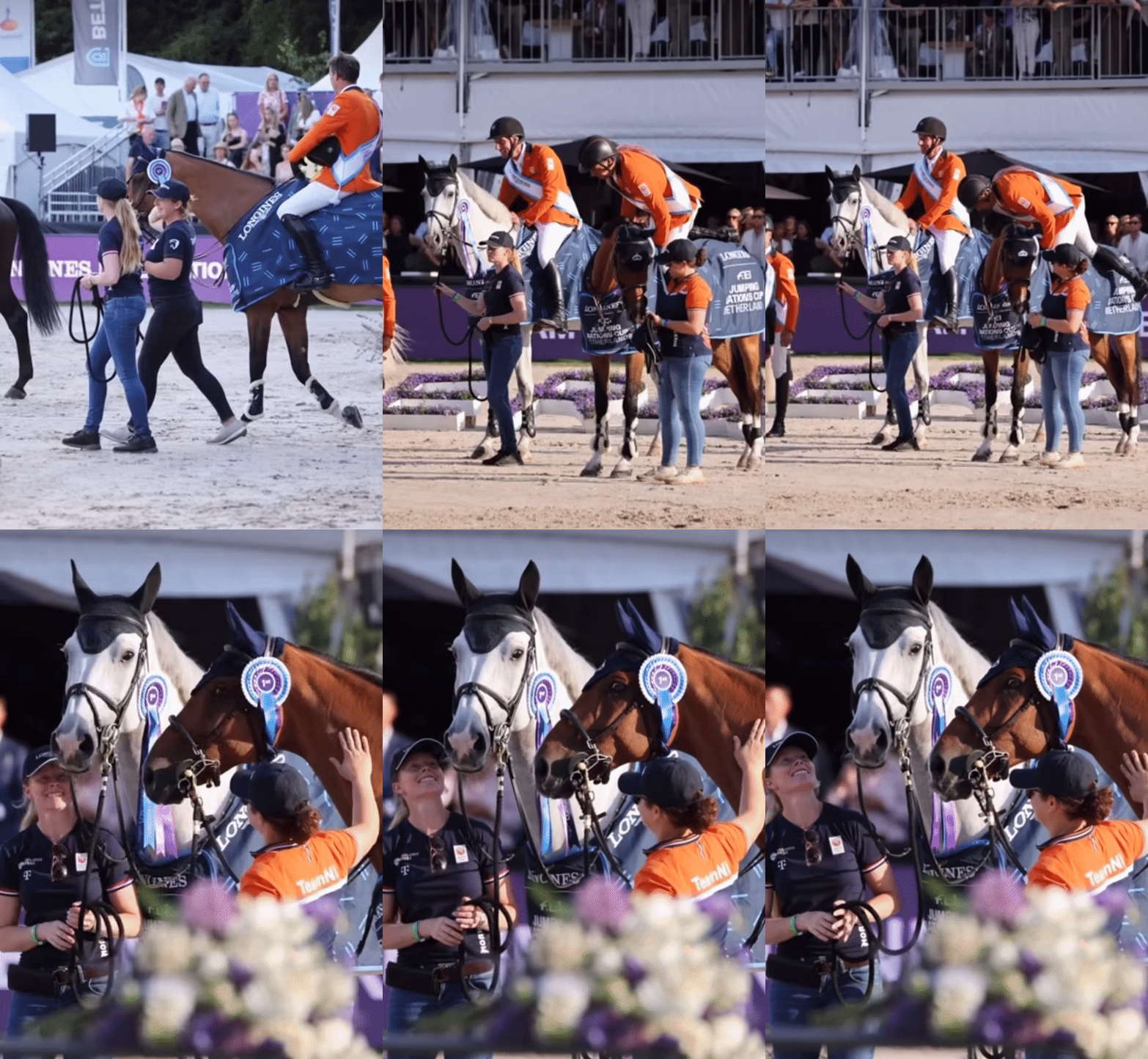
For Ford, that attitude is part of what makes Dwyer such an appropriate first recipient of the grant. The timing also feels right for a profession that is receiving greater recognition. Ford pointed to the recent FEI World Championships in Aachen, where grooms were given a much more visible role alongside their riders and horses.
“They did an amazing job to get the grooms involved in the process alongside the rider,” she said “They had the name and the photo of the groom next to the horse and rider. Obviously the groom’s got to stand on the podium, which I thought was super special.” The new grant is part of that wider recognition of grooming as a career in its own right.
The first year has also highlighted areas the programme can develop. All nine applicants came from an eventing background, despite the grant being open across the three disciplines. Ford sees one of the goals for next year will be to encourage applications from dressage and show jumping grooms as well. “The idea is that we would love to have a range from the three disciplines apply,” she said.
Results this Year Pave the Way for Future Grants
For now, however, the focus is on seeing what the inaugural programme can achieve. “We’re still on a learning curve of how this will work out,” Ford said, “and making sure everyone gets the best experience.”
Dwyer is looking forward to finding out exactly where that first opportunity will lead. She expects to spend at least several weeks with the White team, potentially returning at different points in the season to experience the demands of a professional eventing operation at different times of year.
It is an opportunity that she did not take for granted and expressed surprise that she was called the day after the interview to be told she had been selected. “I was surprised only because I didn’t want to get my hopes up,” she said.
Now the waiting is over and Dwyer is poised to pioneer her way through the consequences of being the first candidate chosen for the grant. “What we get out of this first year – what Caitlin gets out of it and the information she comes back to us with is only going to improve the grant program for next year,” said Ford.
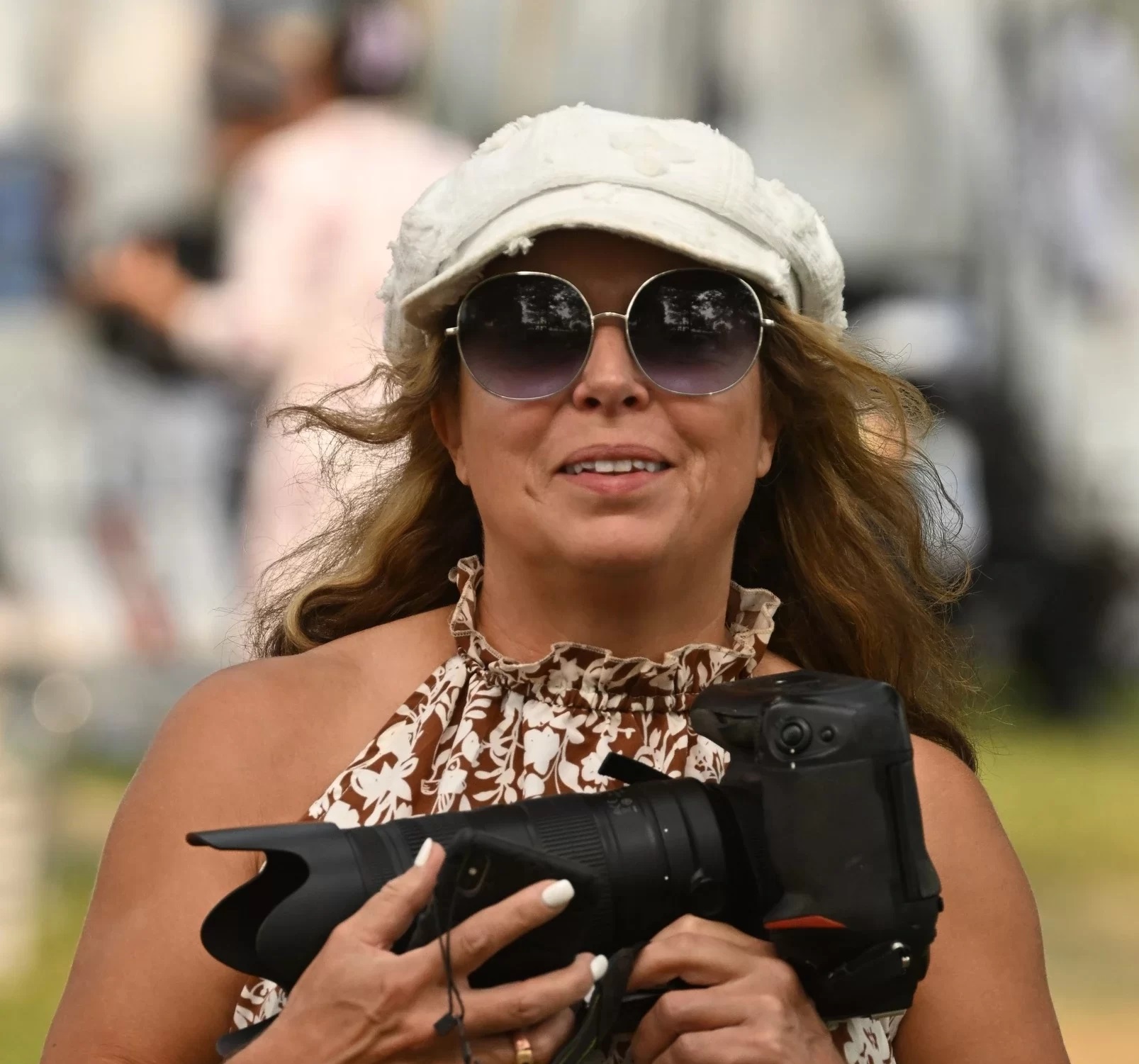
Sarah Eakin has a long history of sports reporting and covering equestrian disciplines – particularly show jumping, polo, racing and dressage – for a range of international publications as writer and editor-in-chief. In 2024, Sarah launched Paper Horse – an online magazine with an eclectic mix of stories from the horse world at www.paperhorsemedia.com. Paper Horse is an official Media Partner of Wellington International. Sarah was born in England and came to the US in 1996 as Sidelines’ Polo Editor; at the time she was chief polo writer at the Horse and Hound and Polo Correspondent to The Daily Telegraph. She married US professional polo player Gary Eakin and stayed Stateside traveling throughout North America while covering equestrian events. She is also an author; Wed, White and Blue, her first novel is on Amazon.