







As grooms, most of us know what it feels like to work behind the scenes, where recognition doesn’t always match the effort we put in. The spotlight is often on the riders, even though it takes a whole team, including the grooms, to support the horse and make everything work.
A few years ago, the sport finally began to recognize that grooms’ lives matter too. We received a few more privileges. Our names and photos were added to the big screen, and more shows started offering groom prizes. All of this is amazing and shows that the sport is heading in the right direction.
But what about the rest?
But what about the grooms who are not working for five-star riders – the ones who never get the chance or want to go to the Europeans, the Olympics, or Nations Cups? What about the grooms at one- to four-star or national level, or the grooms at riding schools or dealing yards, or the home grooms and managers who also work tirelessly to ensure their horses receive the very best care?
Coffee and Energy Drinks
As you all know, this is definitely not a 9-to-5 job. You are never truly off. In many stables, they expect you to be ready to jump in when needed. You’re basically on call 24/7. I’ve had texts or calls from my riders on my days off, and I was expected to be ready to show up in case of an emergency or when there wasn’t enough staff. Many of my show groom friends have experienced the same. We make sure our horses receive the best care while ignoring our own aching backs. We fill ourselves with coffee and energy drinks just to get through 10 to 12-hour days.
” We fill ourselves with coffee and energy drinks
just to get through 10 to 12-hour days. “
I Had To Leave Grooming Due To Injuries
I worked for 12 wonderful years as a show groom in show jumping, but eventually had to leave the field due to injuries – injuries that could have been avoided if I had been given the same respect and rights as employees in any other industry.
I never felt it was acceptable to be sick or injured. I learned early on that if nothing was broken, you were expected to work. I remember feeling as if I were making it all up or complaining too much whenever I had to call in sick or take time off because of an injury. Weakness was simply not accepted, at least not where I worked.
I Finally Went To See A Doctor
For three years, I worked with aching hands that hurt, cramped, and became so stiff they would lock. When I finally saw a doctor, I was diagnosed with Carpal Tunnel Syndrome – a fairly common condition that, when treated early, can often be resolved with physiotherapy and wrist splints.
Instead, I ended up needing surgery on both hands and was completely out of work for eight weeks. Even after that, I wasn’t allowed to lift or carry anything heavy. You can imagine how impossible it would have been to return to normal duties: mucking out, carrying feed bags or hay, and filling water buckets.
Because of additional, much-needed surgeries, my recovery took even longer.
Photo from Pixabay: Nicola Giordano-Wood
Eight Months Later…
When I returned to grooming eight months later, I tried to take things as easily as possible. I started freelancing – working at a show one week and taking the next week off. It went well until I accepted another full-time job.
After only a few weeks, all my symptoms returned – worse than before.
My neck and back began to hurt. It wasn’t just my hands and wrists anymore; both arms were affected. I tried changing jobs to one with fewer horses and less pressure, and I explained my previous injuries and physical limitations.
But instead of lighter work, I ended up working harder than agreed upon – responsible for five horses instead of three.
The Final Nail in the Coffin
After a few months, the pain became unbearable. I realized I had to quit for good.
When I told my employer how badly braiding was affecting my hands, his response was:
“Okay, that’s not good. But will you have the mare braided for the next class?”
My hands were shaking from pain and cramping. I slept only three to four hours a night because of it. And still, it didn’t matter to my employer.
To risk both your physical and mental health, devote your entire life to a job, and not even be shown basic respect or appreciation – that was the final nail in the coffin.
Life After Grooming
I decided to leave the industry and search for something else. That is not easy when you have only worked as a groom since graduation and don’t know anything else.
I am still dealing with the consequences. I have since learned that much of my pain is caused by multiple injuries in my neck from years of heavy work, accidents involving horses, and constantly doing the job of two people by myself. I now live with a herniated disc and osteoarthritis – conditions that will affect me for the rest of my life.
All from a career where, too often, I was made to feel less worthy than the flies buzzing in the stable.

This Is Bigger Than Recognition
This article is not just about public acknowledgment, nor is it written simply to share my personal experience. Yes, it is nice to see five-star groom prizes and our names on scoreboards. But true recognition must come from our employers. We should not have to put our mental and physical health at risk to do our jobs. Even now, as I write this, I find myself worrying that others will see me as weak, as if I am simply complaining. That mindset is deeply ingrained after years of feeling that I was not allowed to show pain.
For Too Long, Illegal and Unhealthy Working Conditions Have Been Normalized
For too long, illegal and unhealthy working conditions have been normalized. Even though I am no longer a groom, I still want to fight for those who are – for the ones still working endlessly to pursue their dream, and for those who dreamed of working with horses since they were children.
A 40-Hour Workweek; Forty hours!! Five days a week!
Every other industry manages to function while giving employees the rights they deserve: fair treatment, health protection, reasonable hours, proper pay, and respect. Why should the grooming industry be any different?
When I began searching for a new career, I discovered that most jobs involve a 40-hour workweek. Forty hours!! Five days a week!! Eight hours a day!!
For 12 years, I believed my 60-hour weeks were good; it was normalized as a full-time job as a groom. These were the hours of the job, and you had no other choice but to accept it. Paid overtime did not exist. Sure, some stables are fair and pay you a few extra bucks on show weeks, but I never got a penny extra for working overtime at home.
If we want change, we must start standing up for ourselves. We must demand fair treatment. We must refuse to accept jobs that consume our lives and destroy our health.
Together We Can Make a Difference
Real change will not come from scoreboards or symbolic gestures. It will come when working conditions change.
And that only happens when we stop accepting less than we deserve.
Read the first article in this series here: Twenty Years In, and Still Being Told How to Wash a Cut…
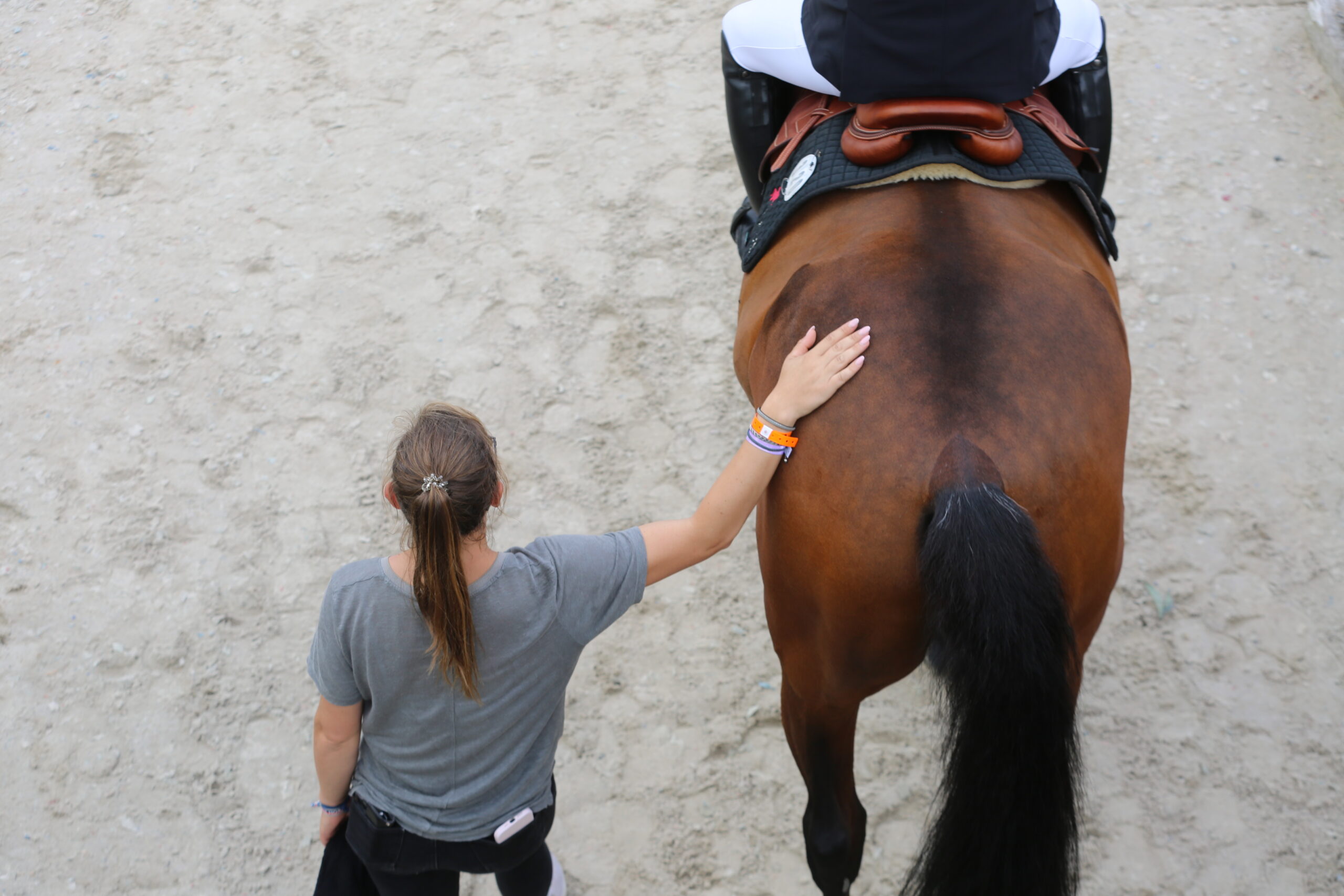
I’ve built my life around horses. Their care comes first, always, often before my own needs, my own rest, my own time. I’ve learned to notice the smallest changes, to stay quiet when it matters, and to give everything I have, day after day. It’s work I’m proud of, even when it’s not always seen or understood. Like many grooms, I don’t speak up easily. Not because I have nothing to say, but because this job teaches you to put the horses, and everyone else, before yourself.
If you work with someone like me, take a moment to truly see them. Because behind every well-cared-for horse is a person who is giving more than you might ever notice.