



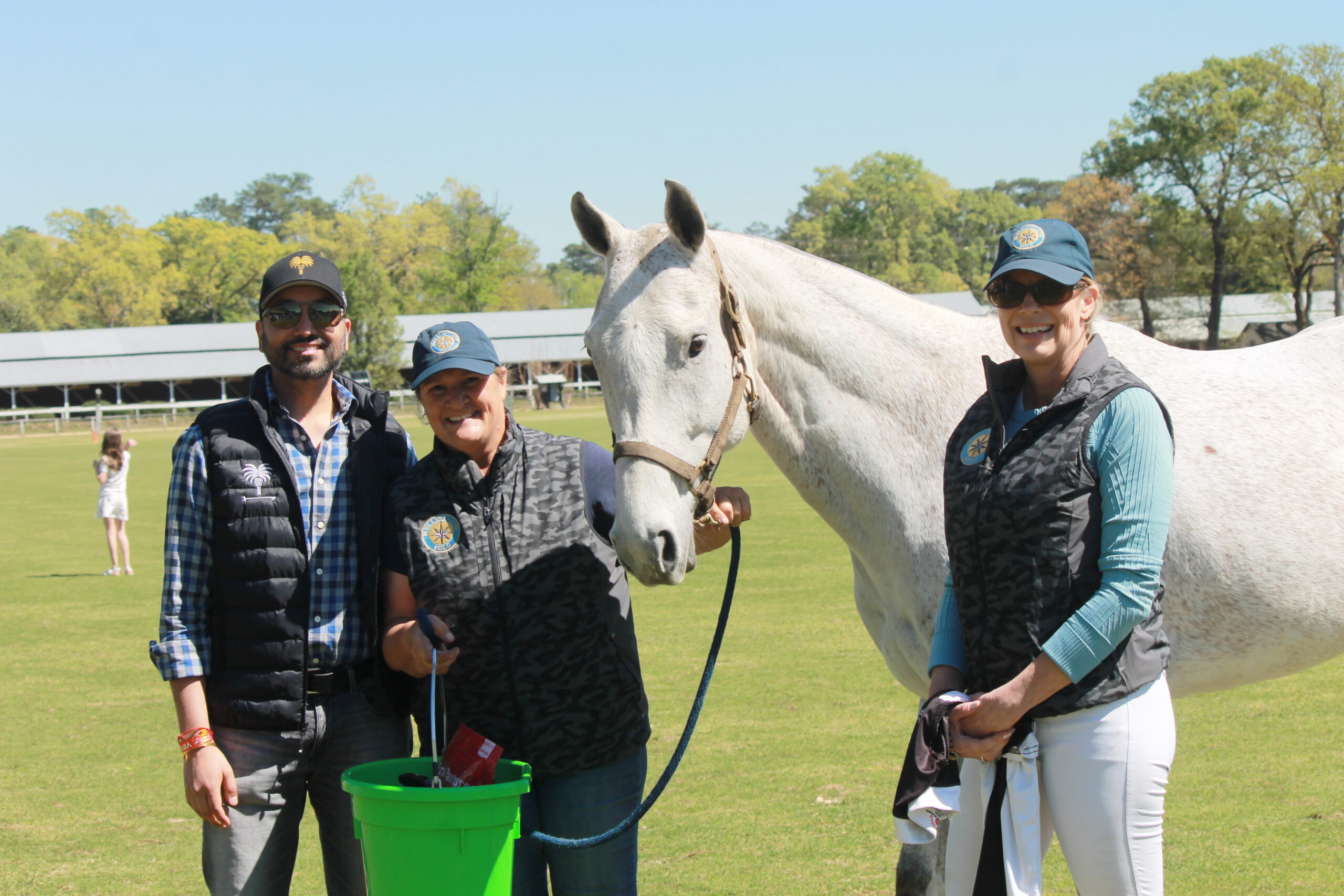
Base camp for a polo team used to be the back of a pickup truck. Bo Taylor, a polo groom of 40 years, remembers players and grooms hanging out in a basic setup around the trailer, before and after the game. Grooms prepared the horses and later packed up equipment while waiting for them to cool off before heading to the barn. There were no sprawling tent compounds, no fleets of support staff, and no multitude of horses for each team player. “Today, grooming in polo is not the same at all,” she said.
Polo in the 80s – the Era of Girlpower
When Taylor started grooming in the late 80s, the vast majority of polo grooms were female, and with some half a dozen horses per player, players typically had just one groom. Many of the top grooms, even in the US high-goal polo teams, were English and had learned about horsemanship from the ground up. They had grown up with ponies, in Pony Club maybe. In Taylor’s case, her father was in the King’s Troop Royal Horse Artillery – a Mounted Battery that pulls WWI- style guns and fires ceremonial salutes on state occasions.
Four decades have seen the role of the polo groom change. Taylor would have looked after a string of horses by herself. “I can do everything except shoeing and teeth,” she said. She would have mucked out, cleaned tack, fed, watered, ridden them in sets (riding one horse and ponying two to four more) – or even individually, aka ‘single’ – and driven the truck and trailer to the polo field and back. The only concession would be game help at the field, in the form of a friend or fellow groom who would lend a hand during the game itself.
Taylor has worked at the top levels of the sport. Polo is divided into low, medium, and high-goal. Players’ handicaps are awarded in goals (nothing to do with goals scored), from beginners at -2 to the best players rated at 10, of which there are some half dozen players worldwide. High goal polo in the US is played at 22-goal – 22 being the sum of the players’ handicaps on the team. Taylor was grooming when high-goal polo in the US was – well, higher. “When I first worked in Florida in the 26-goal, we had maybe six, maybe seven horses for your player,” she said. “You didn’t pay for help at games. You’d help each other because you were friends.”
Modern-day Polo is a Horse Numbers Game
Polo’s roots date back to 600 BC, and the term ‘polo ponies’ originates from the height of the horses used historically. Nowadays, the term remains, but polo ponies are in horse range – around the 15hh mark, give or take. Their bloodlines are Thoroughbred, the modern-day game is dependent in part on speed and agility.
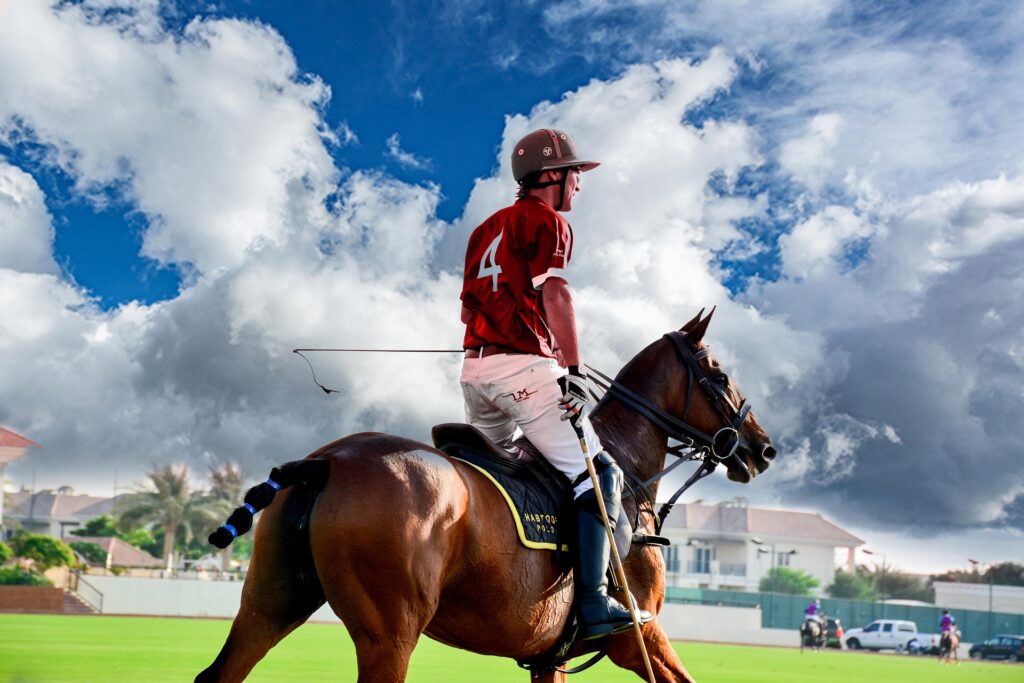
Today, Taylor noted, elite teams arrive at the polo field with “gazillions” of horses, dozens of grooms, mobile veterinary operations, massage therapists, fitness trainers, and imposing team tents. Horses are either tied to the trailer or tied up in pony lines at the end of the field. Team tents are also pitched at the end of the field, which is where the action really happens.
Party Tent
“They show up now with these tents the size of a party tent,” she said. “They’ve got a trainer and a masseuse and this and that. What happened to everyone sitting on the back of that truck just hanging out before the game?”
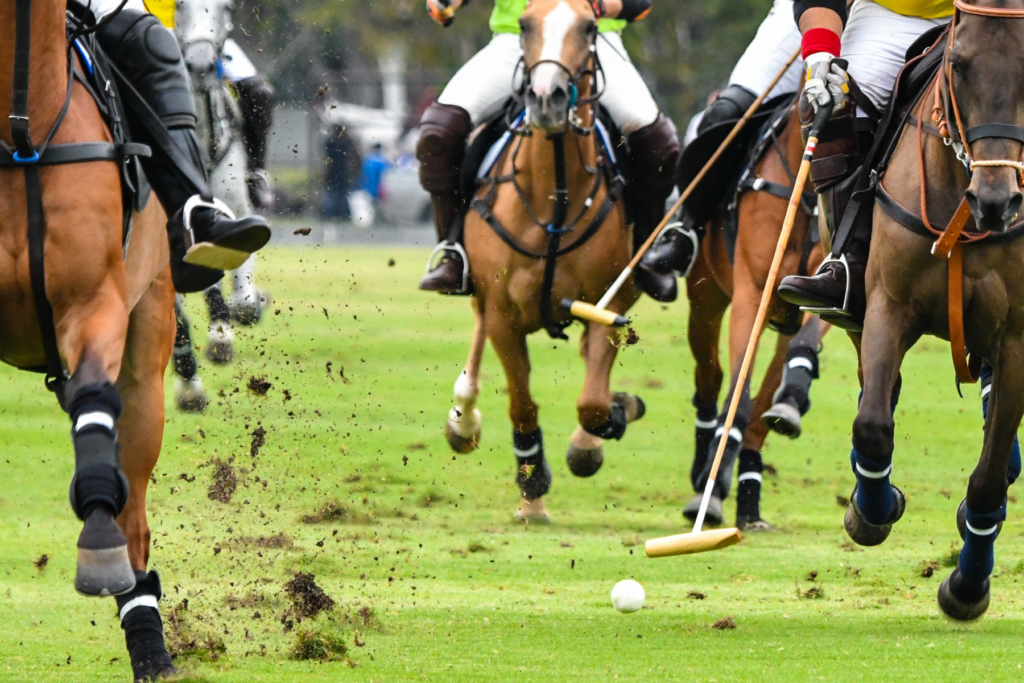
The increased spending patterns of modern-day high-goal polo ripple downward through every level of the sport. Amateur players struggle to afford horses in a market distorted by top-tier spending. A polo match is divided into six periods of seven minutes, so-called ‘chukkers,’ with three minutes between each and ten at half-time
Traditionally, horses would be on the field for a full seven-minute chukker – though it is legal to change horses at any time as play continues regardless. Horses are allowed to play two chukkers in total, so they would often come back for another chukker later, if a player decided to ‘double chukker’ his best horses.
Swapping Out Horses
In today’s high-goal games, horses are constantly swapped out and may only play for a minute and a half at any given time. Grooms ride horses to warm them up and may ride them to the other end of the field during the game, if a player is planning to switch mounts ‘at the far end’. One full-time groom and a ‘friend’ helping out, no longer cuts it, and the end zone is awash with horses, grooms, and managers wielding complex horse lists.
Amid the phenomenon of more is more, cloning polo ponies is a thing, and expensive clones playing high-goal polo, while still the exception and not the norm, is no longer considered remarkable. Traditional grooms – especially women – have largely disappeared from the upper echelons of the game. Most teams rely on their own staff, often brought in from Argentina for the season. “Before when I started, it was 99% all girls,” Taylor said. “Now you very rarely ever see a girl in the higher-level polo.”
Horsemanship Promotes Longevity for Polo Horses
Longevity was the nature of the sport for Taylor, who has groomed no less than 71 Best Playing Ponies in her career – an award given out to the best performance by an equestrian athlete after finals games. But it is less about accolades and more about horse welfare. “My biggest thing is if I end a season with everything sound,” she said. “That’s a big season for me.”
To that end, Taylor is a proponent of old-school grooming, and some of it she learned from old-school ‘gauchos’, the traditional polo grooms of Argentina. “I was lucky to work with some of the greatest gauchos,” she said. “Those guys pretty much lived with the horses.”
You Could Hear Him Sing
Knowing your horses inside out requires the investment of time, and Taylor witnessed the success of that approach firsthand. ”We had this little Argentine mare who was rotten to the bone,” she said, recalling how the gaucho would have to be creative to put the traditional muzzle on – a loose-fitting lower face covering. “You could hear him singing,” she said. “And he’d be sitting in a stall on a bucket with this mare because that’s the only way he could get the muzzle on her. He would sit there, and he’d sing her song, and then when she put her head down, he could put the muzzle on. They took their time.”
The Changing Role of the Polo Groom
Today’s high goal operations have a large number of grooms at the barn and at the field to cater to the double-digit numbers of horses each player has for a season. Back in the day, riding at all levels was essential for a groom. Now skill sets range from ‘Pilots’ who are designated to ride a player’s horses ‘single,’ i.e., not being led in a set. At the other end of the spectrum, some grooms are not allowed to ride at all. Some, meanwhile, are provided with a ‘set’ horse that they ride each time they take the horses out ‘ponying’ them on leadlines in groups of three, four, or five, so they are kept from riding the playing horses. “The guys have their top grooms now,” Taylor said. “But a lot of the other guys are just robots. They’re there for manual labor.”
Traditional Horsemanship
Traditional horsemanship is rooted in knowledge of each individual horse. “I know all my horses,” said Taylor, who recalls looking after a string of 22 stabled horses by herself. “I know if somebody’s not right the second I walk in the barn.” That knowledge comes from years of consistency and observation – noticing how often a horse drinks, whether it produced less manure than usual, whether its energy shifted subtly overnight. “Most people wouldn’t even pay attention,” she said. “But if you work around them, you know.”
Slow and Steady Wins the Game
Her own methods remain tried and tested. Taylor brings her horses up from vacation slowly. Two weeks of nothing but walking is followed by weeks of walking and trotting. Cantering is left to horses being ridden single or playing practice. “It’s not just trotting,” Taylor said. “It’s a good working trot.” The exercise builds muscle and tendon strength and also helps to balance the horse, rather than favor one side – a bi-product of cantering repeatedly on the same leg, in the same direction, around an exercise track. “Every horse becomes right-side strong doing that,” she said. “People don’t realize that. And then they wonder why the horse won’t turn to the left.”
Let Them Be Horses – and Let Them Drink Water
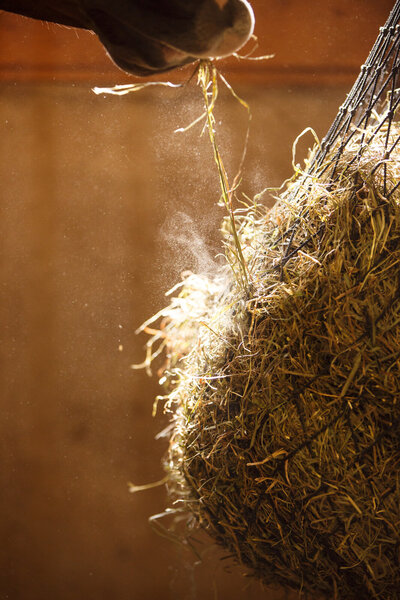
Taylor keeps her feeding regime simple. No emphasis on supplements, just good grain, beet pulp, salt and a good timothy/alfalfa mix for hay, which she serves in a haynet. She rejects the fear that horses will fill up with too much water before a game. “No horse in the history of me working them knows we have polo that day,” she said. “Let my horses drink. If they’re thirsty, they drink.” This also applies to after they have played. Taylor does not hold to the theory that horses should not be given water after exercise for fear of colic repercussions. “If they are too hot, they won’t drink,” she said. “If they want to drink, they should be allowed to.”
While polo ponies can lose their identity in a string of horses – they should be treated as individuals and their personalities taken into account. “I tie them up at the polo field next to the horses I know they get on with,” she said. “The same in the barn – I know who’s friends with who and they get put next to each other.” She also opposes excessive muzzling and rigid stable systems. “I want them to hump or be naughty,” she said. “That’s who they are. Let them be horses.”
Barn Care – Missing Brushes and Hot Towels
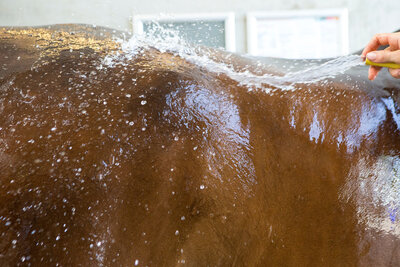
Among the disappearing practices that Taylor prefers are things as fundamental as grooming itself. “I walk into barns sometimes and can’t find a body brush,” she said. “It’s all about hosing horses off, which can strip the skin of essential oils and nutrients.” Taylor uses an old-fashioned system – especially useful in colder weather. “Most grooms nowadays have not heard of ‘hot-toweling’” she said. It is a method used after the dirt and grime has been bruised off the coat and buckets of mildly soaped warm water and cloth are used to remove the final traces, before non-soapy water provides a rinse.
I Love My Saddle Soap
Taylor cleans her tack with the original combined method of product and elbow grease. “I love my saddle soap,” she said, steering clear of short cut methods and never resorting to truly primitive cleaning approaches to bridles. “I see bridles being hosed down sometimes in barns,” she said.
Preventative Measures
Returning to the barn after a game of polo, the horses’ legs may need to be addressed. But Taylor is all about preventative measures. “Aside from accidents, which can happen, generally speaking, tendon problems occur when a horse is not fit enough.” She also administers post-game poultices and healing wraps, administering small amounts of DMSO and alcohol, sparingly. “If the horses have had a really hard game, I will wrap them overnight,” she said. “But I think the more you do that, the weaker the legs become.”
Bandaging
Bandaging horses from just skimming the fetlock to just below the knee prior to playing is a universal practice intended to provide tendon support. Plastic boots are placed over bandages to protect the tendons at the back of the front legs. But what can be a preventative measure can also be a cause of lameness – particularly if bandages are poorly wrapped. According to Taylor, consistency and knowledge are key. “I bandage all my own horses,” said Taylor. “If you have different grooms bandaging – or worse, two grooms bandaging the same horse – there is no consistency in the tension or pressure on the legs. I’ve seen some horrific examples of bandaging that won’t prevent a tendon injury but likely cause one.”
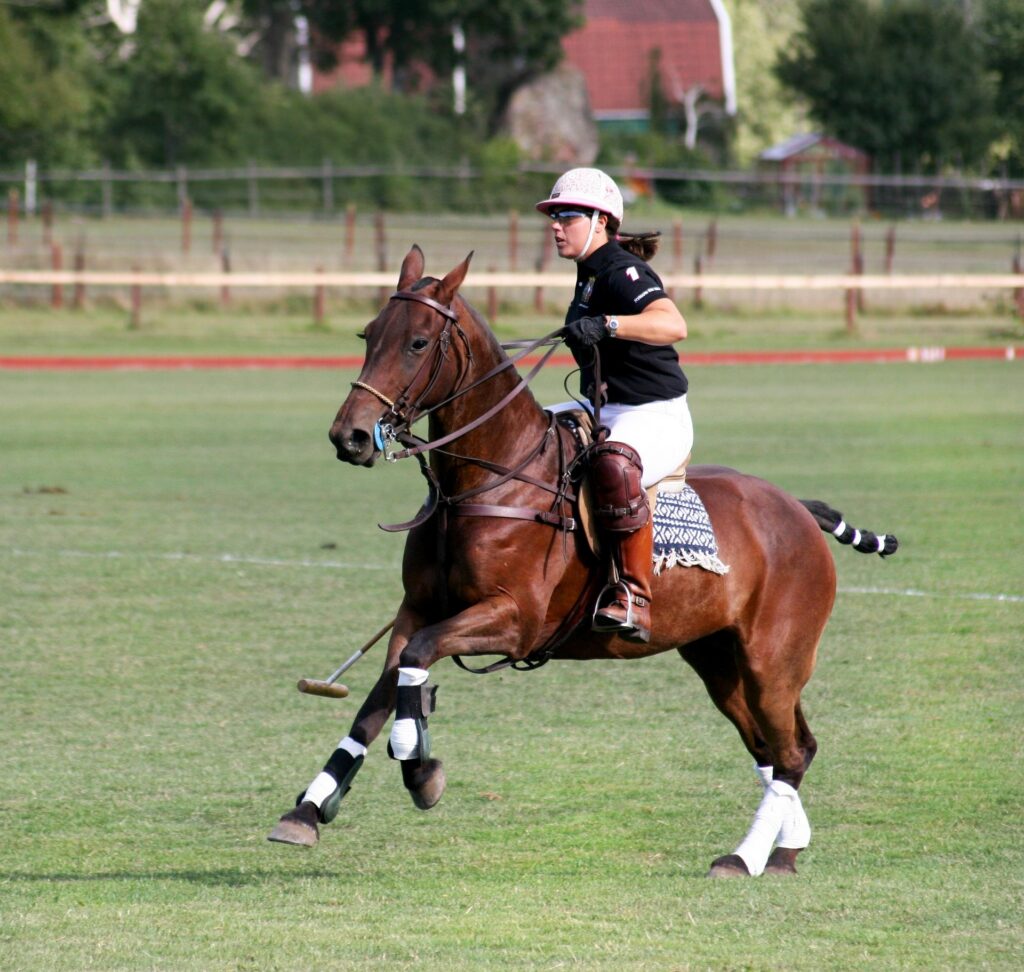
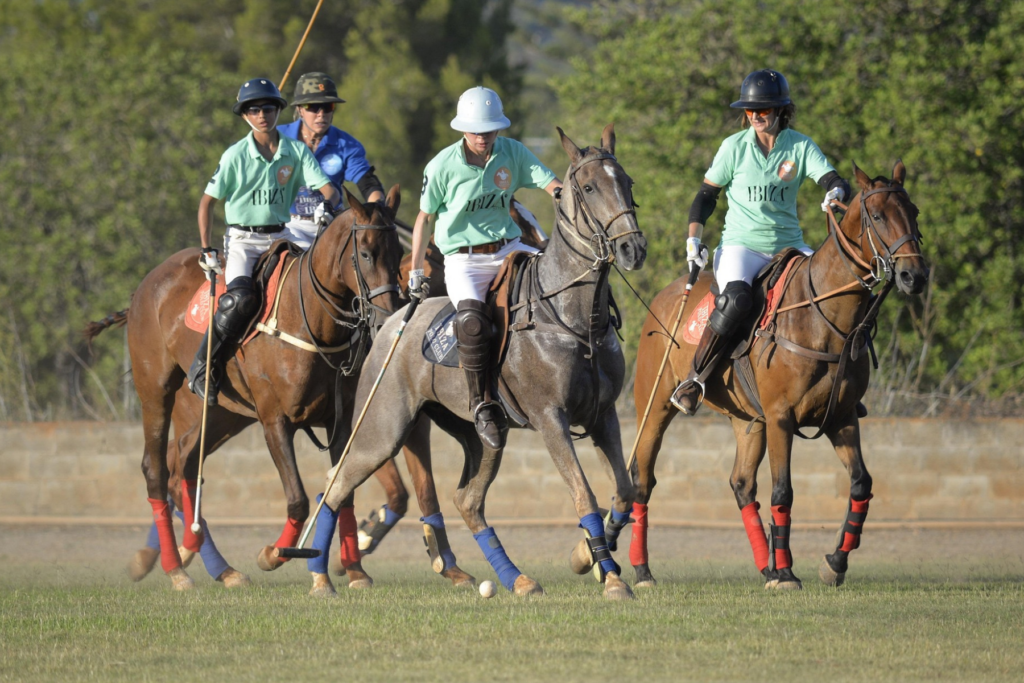
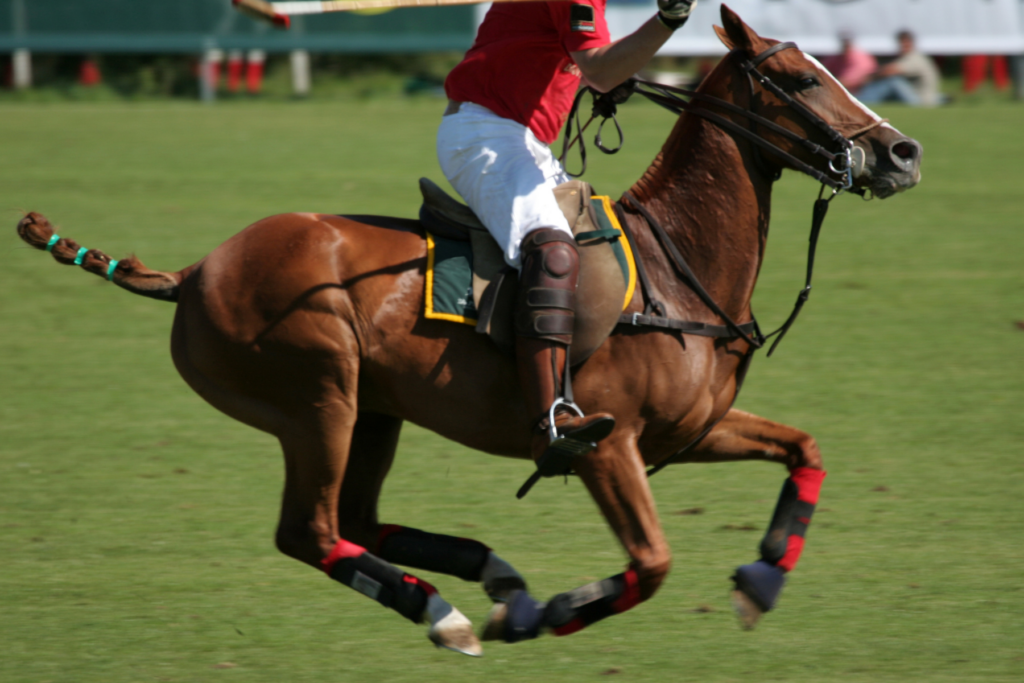
Leg protection is important in polo, but not every player opts to add boots over the bandages.
Horsemanship Produces Fitness
The sport’s escalating costs have transformed competition itself. In lower-goal polo, players once relied on the minimum – sometimes three horses for six chukkers, each one ‘doubling up’. The common practice of frequently changing horses changes the style of play as well. Horses stay fresher because they play shorter periods, encouraging faster, more explosive polo. But some would argue – and Taylor is one of them – it sacrifices endurance, strategy, and horsemanship.
Today, even moderate-level teams may rotate through a dozen horses a game per player. “These guys are showing up with 12 horses for four-goal polo,” she said. “It’s ridiculous. If a horse cannot play a full chukker of polo, it is not fit enough – it has not been brought up to fitness.”
Equally, Taylor advocates ‘roughing off’ horses after a season of polo. It is a term that has fallen out of fashion – the practice of gradually winding horses down, gradually lessening feed and exercise, before pulling shoes, hardening the feet by gentle walking, and then turning them out to rest and pasture.
Simply Put the Horses First
Polo may have changed, but for Taylor, the principles of grooming have not. “Sometimes younger grooms might look at you and think, ‘What do you know?’ But horses as animals have not changed, and neither have the skills of horsemanship that grooms need to look after them. My horses always come first,” she said simply.
Photo credits: Featured photo by Maybe Ortiz/poloposts

Sarah Eakin has a long history of sports reporting and covering equestrian disciplines – particularly show jumping, polo, racing and dressage – for a range of international publications as writer and editor-in-chief. In 2024, Sarah launched Paper Horse – an online magazine with an eclectic mix of stories from the horse world at www.paperhorsemedia.com. Paper Horse is an official Media Partner of Wellington International. Sarah was born in England and came to the US in 1996 as Sidelines’ Polo Editor; at the time she was chief polo writer at the Horse and Hound and Polo Correspondent to The Daily Telegraph. She married US professional polo player Gary Eakin and stayed Stateside traveling throughout North America while covering equestrian events. She is also an author; Wed, White and Blue, her first novel is on Amazon.