




I still remember my first horse show in the United States, fresh off the plane from Europe, fully convinced I understood how a show jumping warm-up worked.
I did not.
I stood there for a solid twenty minutes trying to figure out if I had misunderstood the rules, missed an important briefing, or accidentally wandered into a private training session.
Because what I saw made absolutely no sense to my European brain.
One Jump For Every Rider
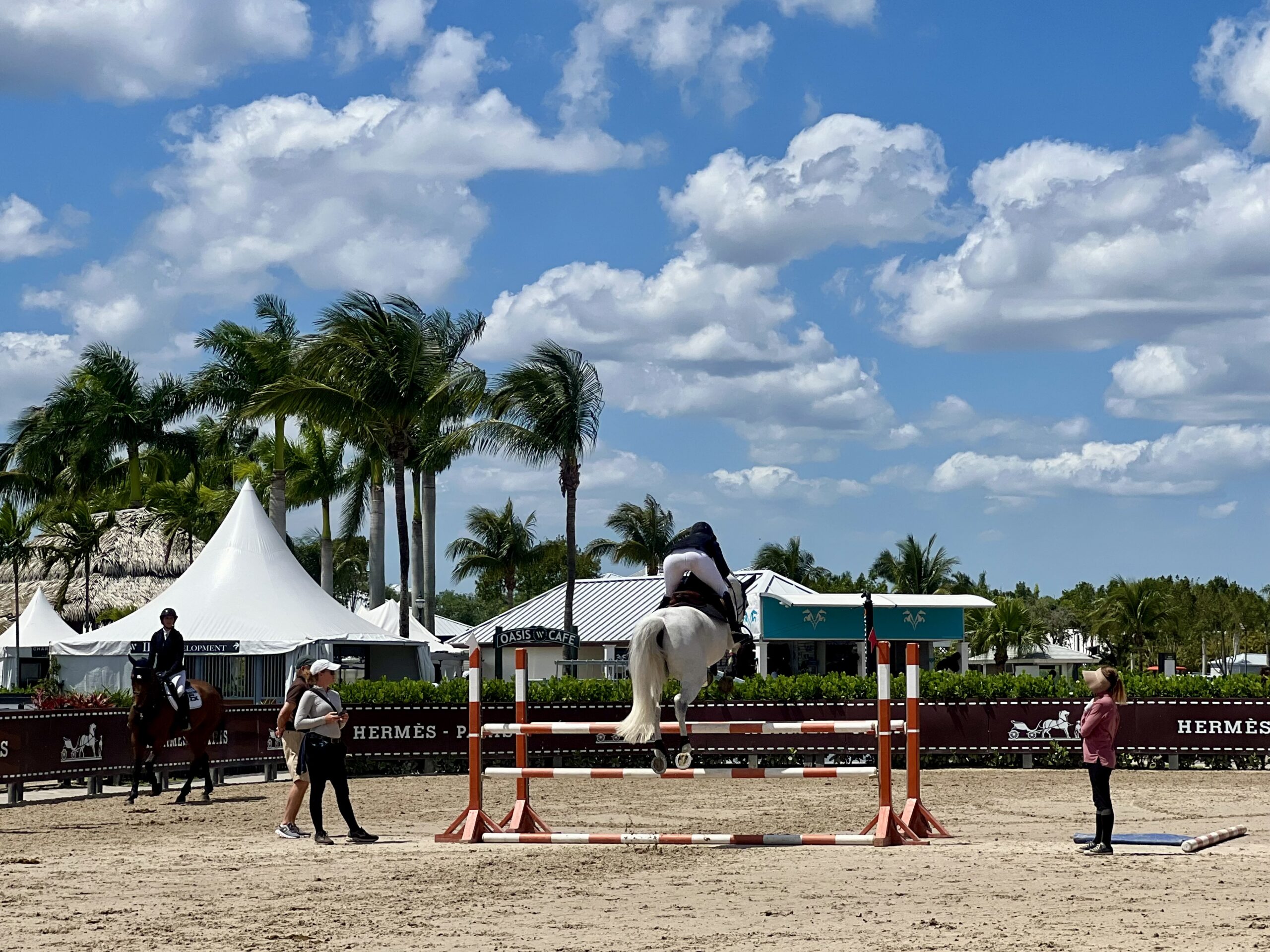
There were four jumps in the warm-up ring. Each one with enough standards and poles. Nothing unusual there. But then came the truly shocking part…
Every jump belonged to one rider.
One.
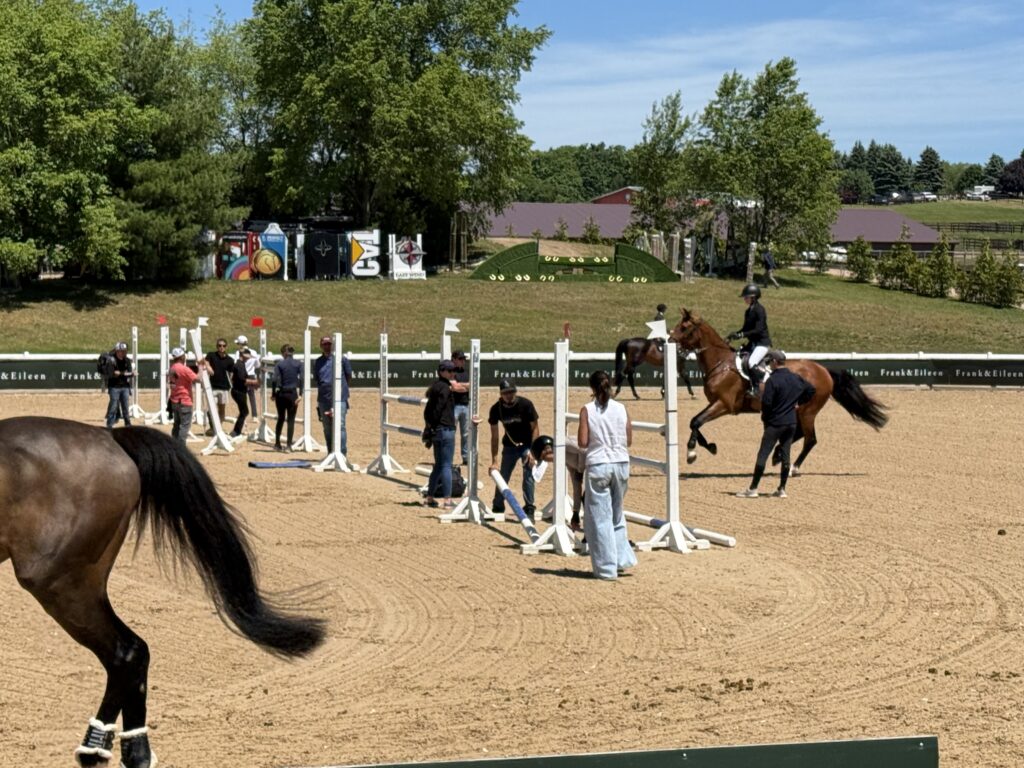
Just one horse cantering to the fence. One trainer standing there calmly. One groom adjusting poles in peace. Sometimes also a barn manager. But no one cutting in. No one circling aggressively. No one yelling “VERTICAL!” across the arena while six other riders tried to survive in a space the size of a postage stamp.
Structure
It was structured and quiet. Suspiciously quiet.
In the United States, you basically get assigned your own jump for a certain amount of time. You can set it however you want, within the rules, of course. Guide rails? Fine. Bigger ground line? Sure. Want to jump the same oxer six times? Nobody is fighting you for it.
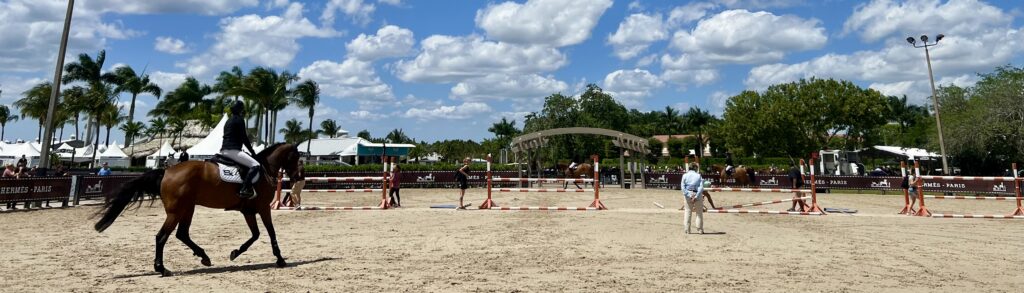
Coming from Europe, this felt luxurious. Almost unsettling. And because nobody else is using your jump, you don’t spend half your warm-up negotiating pole heights like diplomats at a United Nations summit.
Organized Chaos
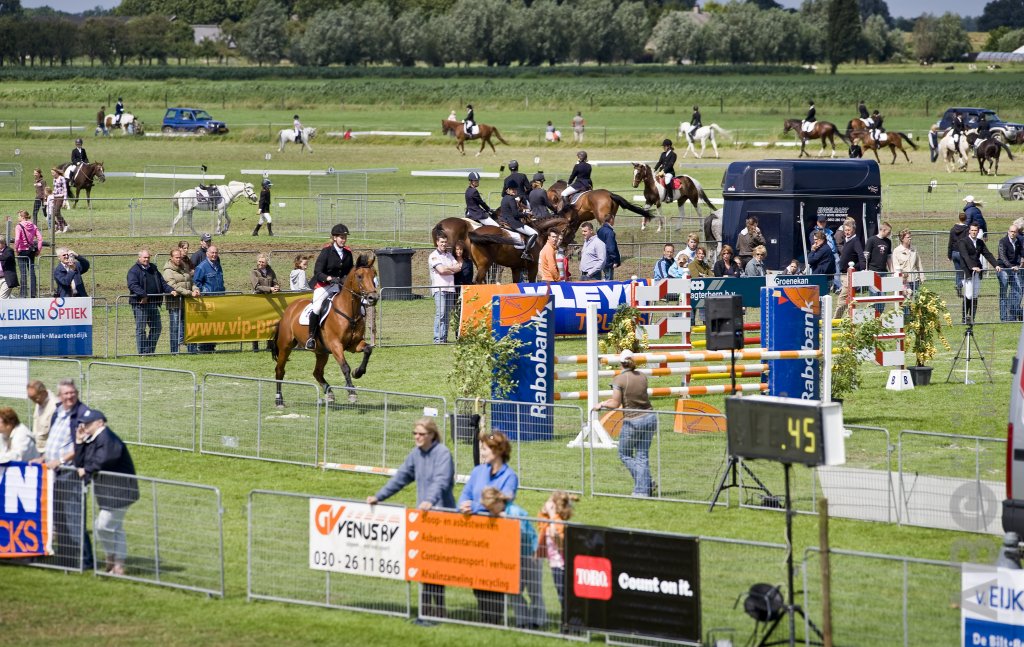
In Europe, things work a little differently. Actually, “differently” is too gentle a word. European warm-ups are organized chaos. Mostly organized. Occasionally, just chaos.
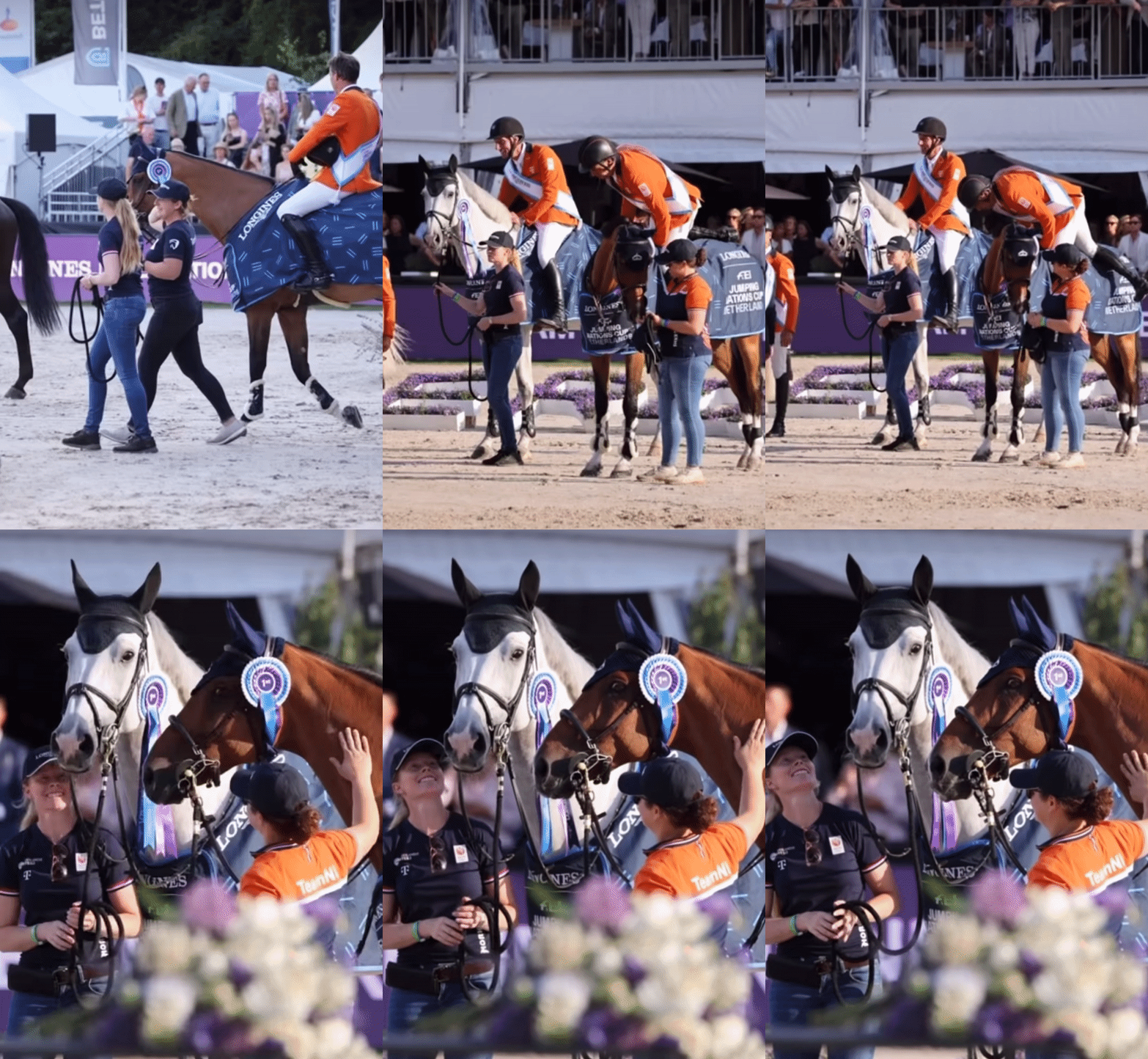
Photos courtesy of Arnd Bronkhorst Photography
A Direct Threat To Humanity
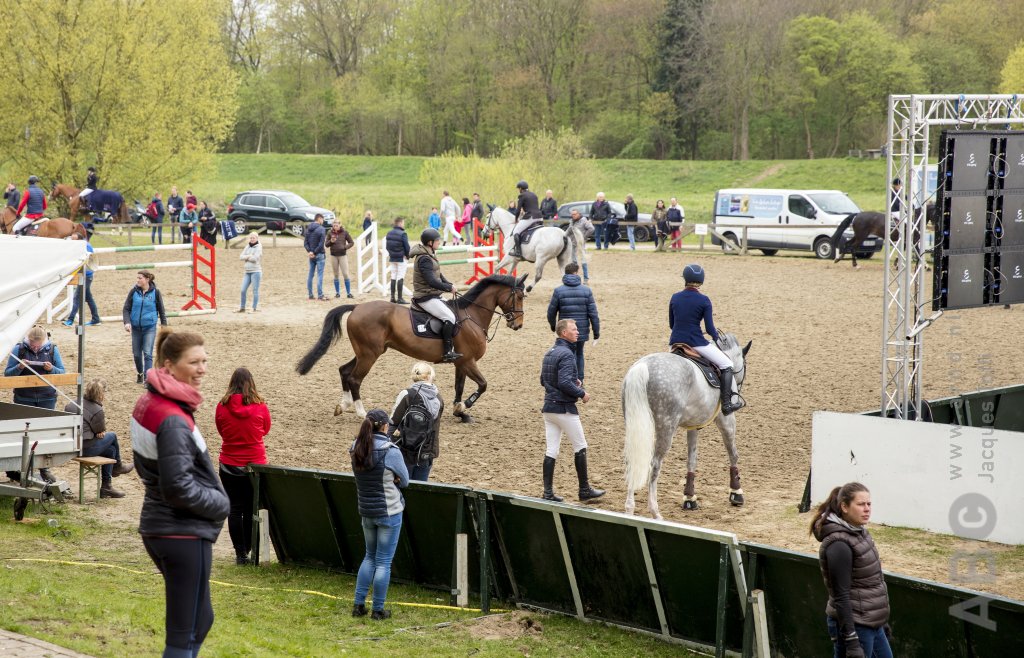
Most riders in Europe get on their horses around fifteen to twenty horses before they enter the show ring, which means there are about twenty horses in the warm-up at the same time.
Trotting. Cantering. Changing direction. Doing half-halts every three strides. Trainers yelling instructions in four different languages. Grooms sprinting around with poles. Someone’s horse spooking at absolutely nothing. Another horse convinced the flower box is a direct threat to humanity.
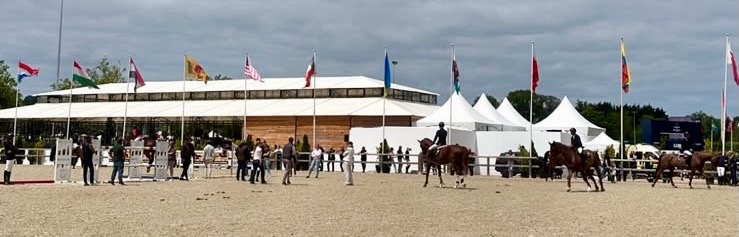
Two or Three Jumps Shared By Basically Everyone
It is busy. You are never fully relaxed. And you shouldn’t be. Because you need to survive this.
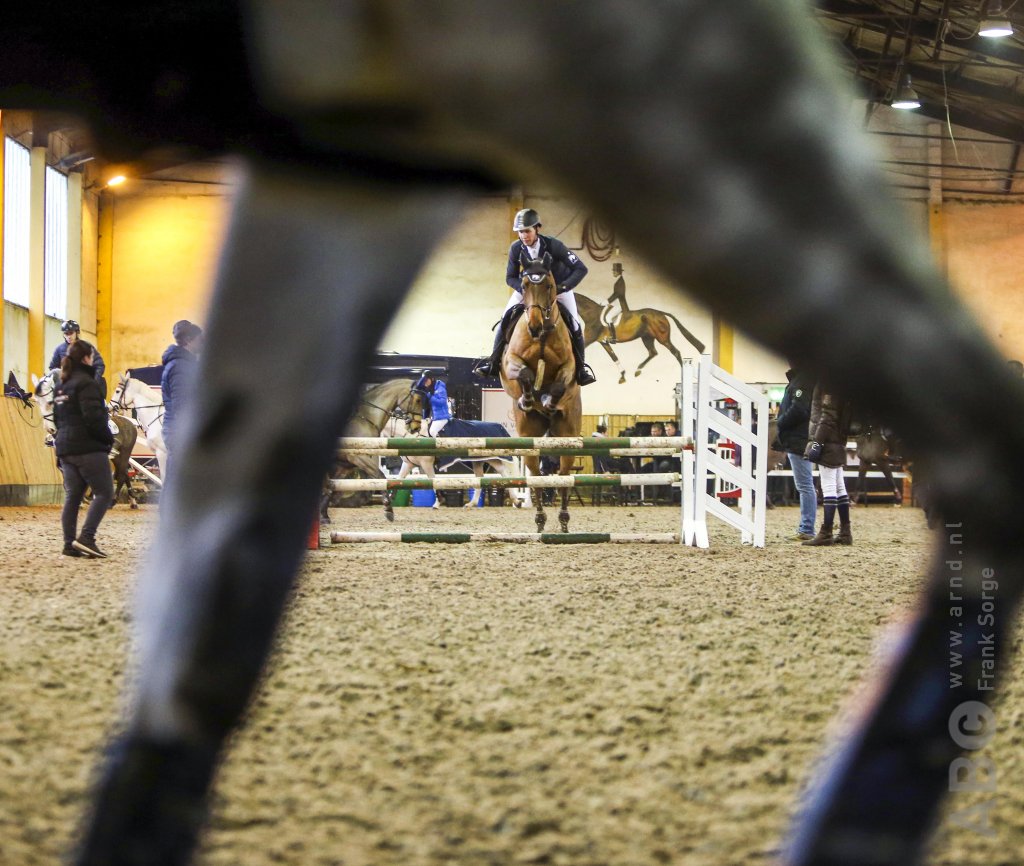
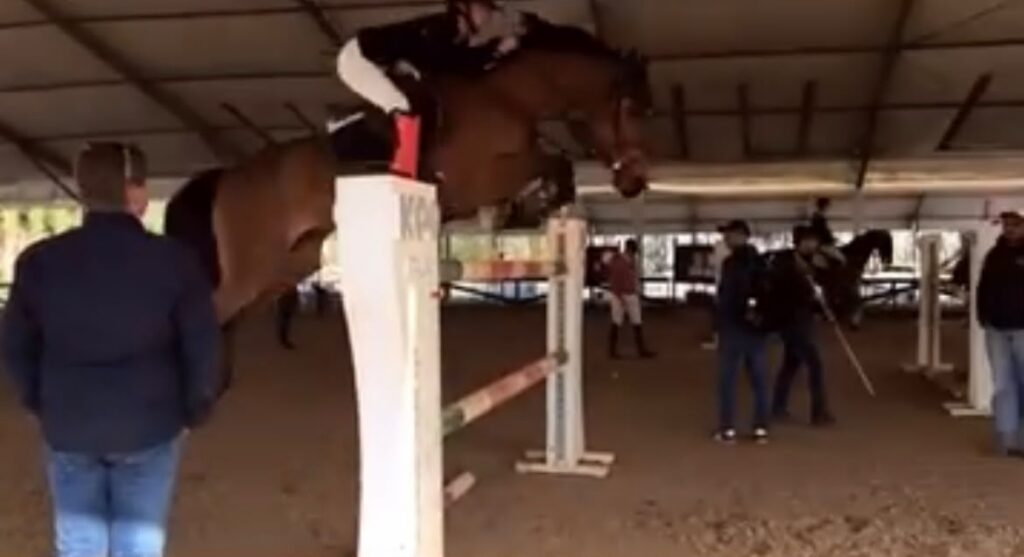
People usually start jumping when they are about eight to ten horses out (eight to ten horse-rider combinations before they enter the competition ring). Most warm-ups have one vertical and two oxers, depending on the venue. At smaller, local shows, there are often only two jumps. Sounds simple enough, until you realize those two or three jumps are being shared by basically everyone.
At the same time.
Photos courtesy of Arnd Bronkhorst Photography
Democratic and Terrifying At The Same Time
This is where the real European experience begins.
You do not own the jump. The jump belongs to all the people. You build it together, lower it together, widen it together, and occasionally stare at each other passive-aggressively while trying to decide whether the back rail should go up one hole or two.
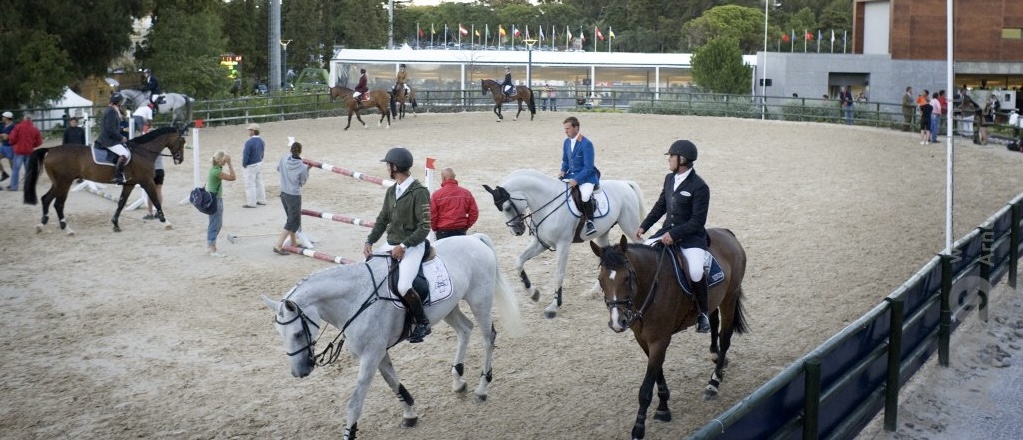
Photo courtesy of Arnd Bronkhorst Photography
Very little is actually communicated clearly.
Someone’s horse hits a pole. Someone else immediately puts it back up.
Another rider wants the entire jump changed, and somehow everyone adapts and keeps going.
It is surprisingly democratic.
And terrifying at the same time.
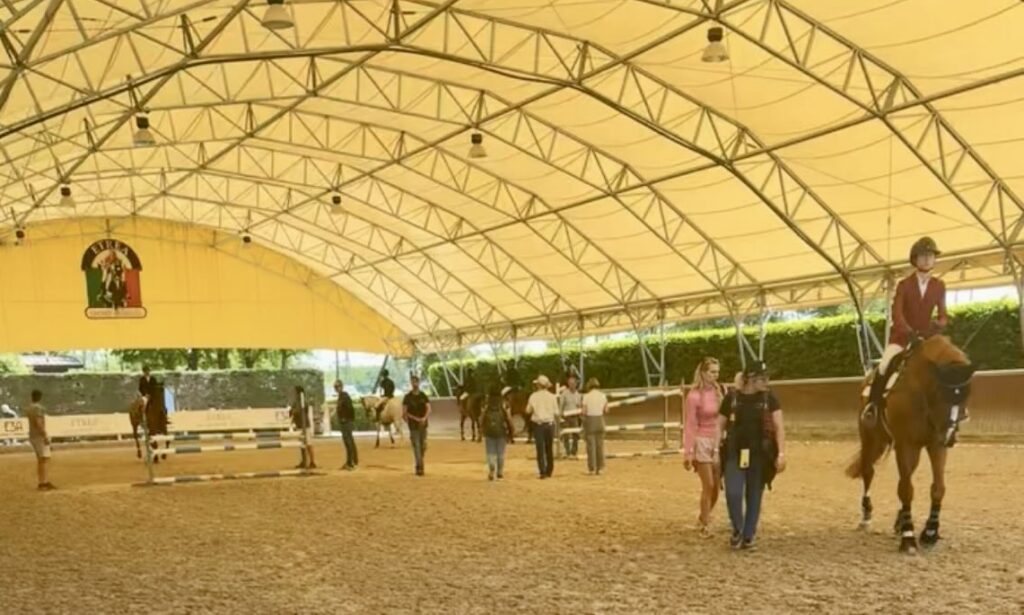
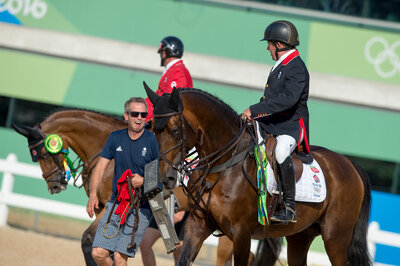
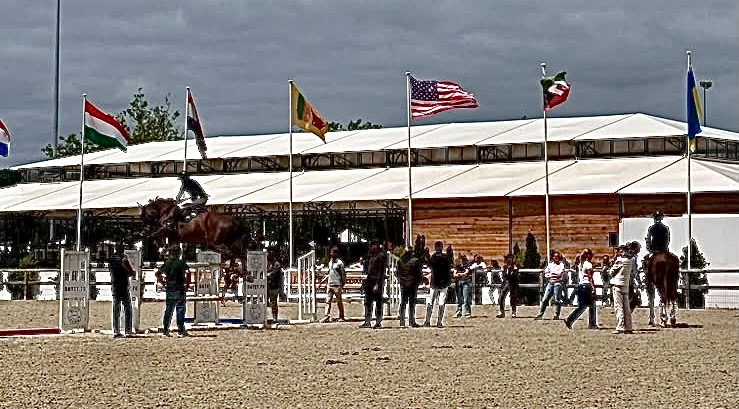
Left photo: a relatively quiet warmup ring at Busto Arsizio in Italy.
Risk Your Life
Then there are the moments every European groom knows too well. You finally get the oxer exactly where your rider wants it. Perfect height. Perfect width. And right at that exact moment, your rider goes like:
“Can you hold him for a second?”
“Let’s adjust the bridle.”
“I think we need to put on his hind boots now.”
And suddenly, the jump you carefully built is no longer yours. Within thirty seconds, it has been lowered, widened, turned into a vertical, jumped three times by another rider, and adjusted again by a groom who wasn’t there before your rider decided to take a break.
Now you have two choices:
You can patiently wait for the jump to return to your preferred height.
Or politely risk your life trying to squeeze in one quick jump between six other riders who are also trying to squeeze in one quick jump.
The amazing thing is… somehow it works.
There is an unspoken system to it all. If you help build jumps for others, they usually help you. If you stay aware, communicate clearly, and don’t act like the warm-up ring revolves around you, people generally work together surprisingly well.
It runs entirely on mutual survival instinct.
And experience.
Air Traffic Control and Formula 1 Pit Crew
A European warm-up teaches you spatial awareness, timing, reasoning, conflict management, and probably advanced stress control. By the end of a busy Saturday Grand Prix warm-up, most grooms could easily qualify for air traffic control.
American warm-ups, meanwhile, feel calm, structured, and efficient. There’s less pressure around the jumps themselves, more predictability, and far fewer near-death experiences involving flying poles and sudden rollbacks.
Two very different systems.
One feels like a private lesson. Calm, structured, civilized.
The other feels like survival.
A European warm-up turns every groom into part air traffic controller, part Formula 1 pit crew, with lightning-fast reflexes, stress management skills, and a slightly elevated heart rate.
And somehow, against all odds, everyone still gets to the ring on time.
Want to read more “eye-witness” stories from Nora?
Check out her other articles:
- A Groom’s Truth Unfiltered; The Pain Behind the Passion
- What is a Fair Wage in the Equestrian Industry?
- How To Promote Your Team’s Sponsors Through Visual Content